

Letters form the foundation of words, language, and, ultimately, the skills needed to read and write. Learning activities involving the ABCs are essential in the early years. That’s why we rounded up 36 fun and easy ABC activities for early learners to spark your lesson planning. With so many creative ways to practice, alphabet activities will be your students’ favorite part of the day!
Jump to:
According to experienced literacy teacher Lisa Elaine Peters, alphabet activities are the foundation for everything that comes later. “Before children can become confident readers and writers,” she advises, “they need to recognize letters, connect them to their sounds, and be able to quickly recall that information. Those skills eventually become automatic, which frees up their brains to focus on reading words and understanding what they read instead of trying to figure out every single letter.”
Lisa also points out that alphabet activities help build confidence. “When students have successful experiences with letters and sounds, they’re much more willing to take risks when they start reading and spelling,” she explains. “It may seem simple, but those early experiences make a huge difference.”
Tips for Teaching the Alphabet
Lisa shared the following practical advice for teaching alphabet activities that build foundational literacy skills.
1. Make alphabet practice part of your daily routine.
Instead of isolated lessons, Lisa recommends weaving literacy work throughout the day, providing students with short, consistent practice every day.
“In my classroom, alphabet work shows up all day long,” Lisa shares. “We review letters and sounds during our morning meeting, practice them during whole-group phonics lessons, reinforce them in small groups, and revisit them during centers. Those little moments throughout the day really add up.”
2. Make alphabet instruction as hands-on as possible.
Some students learn best by seeing, others by hearing, and many need to move. “We trace letters, build them with manipulatives, sky-write them, say the sound aloud, match pictures, use motions, and practice writing them. The more senses involved, the stronger those connections become.”
3. Keep activities purposeful.
In Lisa’s experience, games are fun, but if students are only focused on winning, they’re not making the connection that they’re actually building skills. She advises having a clear learning goal for each activity as well as ensuring they are engaging.
How To Choose the Right Alphabet Activity
To begin, Lisa Peters answers this question by asking herself: What skill am I trying to teach?
“If students are struggling to recognize letters, I choose activities that focus on identification,” she explains. “If they know their letters but aren’t connecting them to sounds, I choose activities that strengthen those sound-letter connections. If they’re beginning to write, I’ll include activities that practice letter formation and applying those letters in words.”
She also considers the level of support her students need: Do they need explicit teacher guidance? Or are they ready for independent practice or partner work?
Here are a few ideas for how to choose the right alphabet activity:
- If students don’t recognize letters → use recognition games
- If they know some letters → add matching/sorting
- If they’re ready → add letter-sound exposure
- If they need engagement → use movement-based activities
Most importantly, Lisa advises, “The best alphabet activity isn’t necessarily the cutest one—it’s the one that gives students meaningful practice with the skill they need most.”
For more great ideas from Lisa Elaine Peters, be sure to follow her on Instagram at @lisaelaine.
Whole-Group Alphabet Learning
Alphabet Read-Alouds
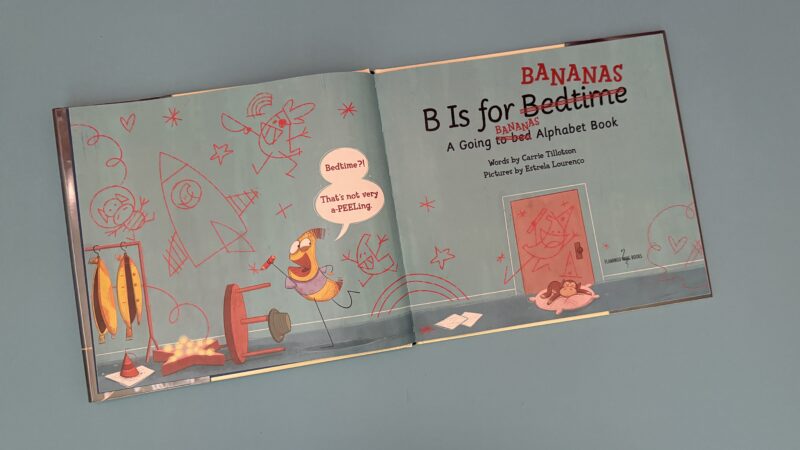
Always our number-one go-to, especially with little ones: Read, read, read! There are hundreds of books to choose from that explore the alphabet. For a list of our faves, check out Best Alphabet Books for Kids of All Ages.
Skills: Engagement, letter recognition, phonemic awareness, print literacy
Letter of the Week
Many pre-K and kindergarten classes do a letter of the week, and for good reason. Teaching instant recognition of letters and what they sound like, and practicing writing them, is so important for learning to read. Doing alphabet activities for one letter each week reinforces knowledge and recollection.
Skills: Letter recognition, letter-sound correspondence, phonemic awareness
Alphabet Videos
Take a trip to Sesame Street, watch an animated version of Chicka Chicka Boom Boom, or do the alphabet dance. There are so many fun, engaging videos that help students build foundational reading skills. The advantage of videos is that students can see, hear, speak, and move while learning. Check out our faves at Best Alphabet Videos for Kids.
Skills: Visual discrimination, phonemic awareness, vocabulary, oral language
ABC Book
Staple 26 half-pages of paper together or hole-punch and tie them together with yarn. This activity will take many sessions to complete all the steps. One page at a time (from A to Z), have students write a letter on its own page—uppercase and lowercase. Then, have them illustrate that page with things that begin with that letter.
Skills: Letter recognition, letter formation, handwriting, small motor skills
Sticky Note Search
If, like many teachers, you teach one letter per week, this is a fun activity to reinforce letter recognition. Each week, prepare an easily accessible poster board by writing one letter (in uppercase and lowercase) at the top. Then, sometime when students are away, hide sticky notes around the room. Whenever your students come across one of the sticky notes, they will be excited to add it to the poster.
Skills: Letter recognition, engagement
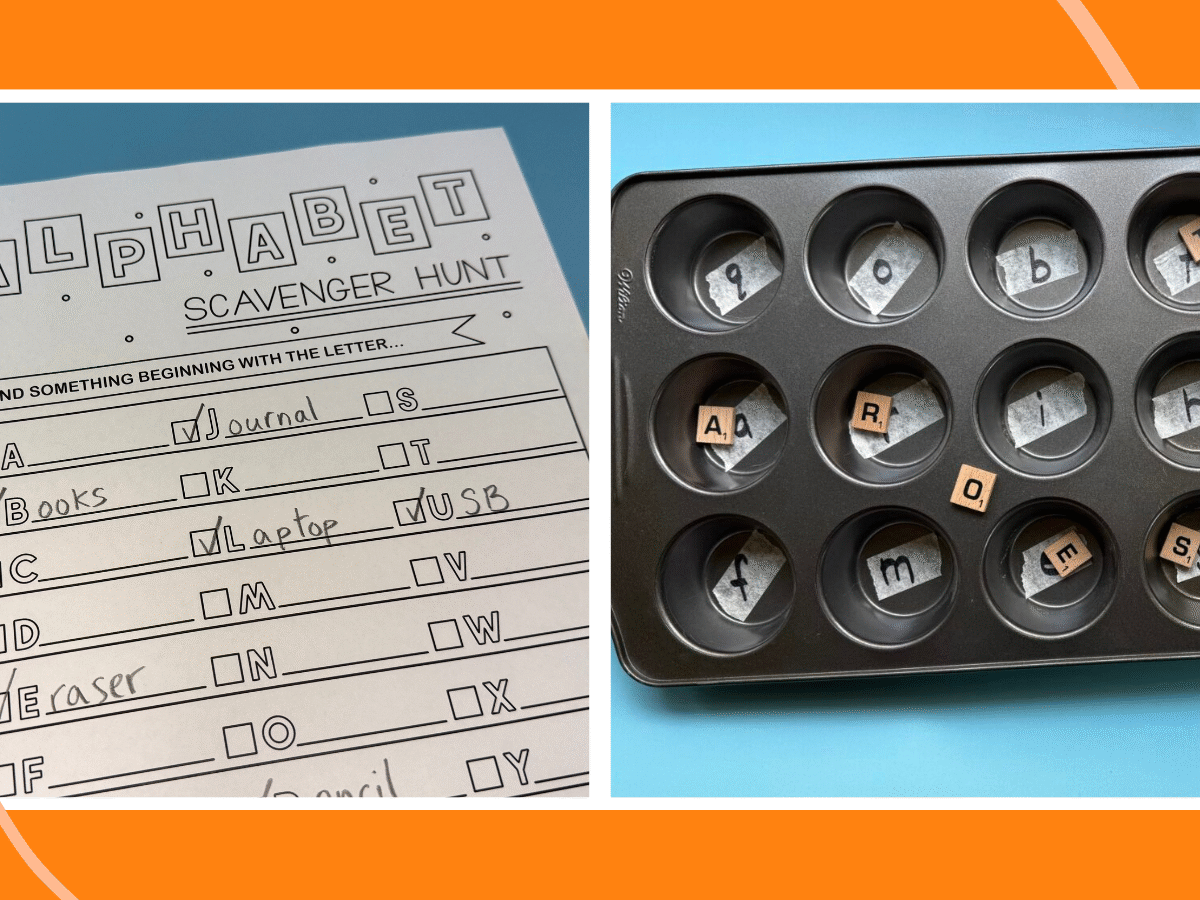
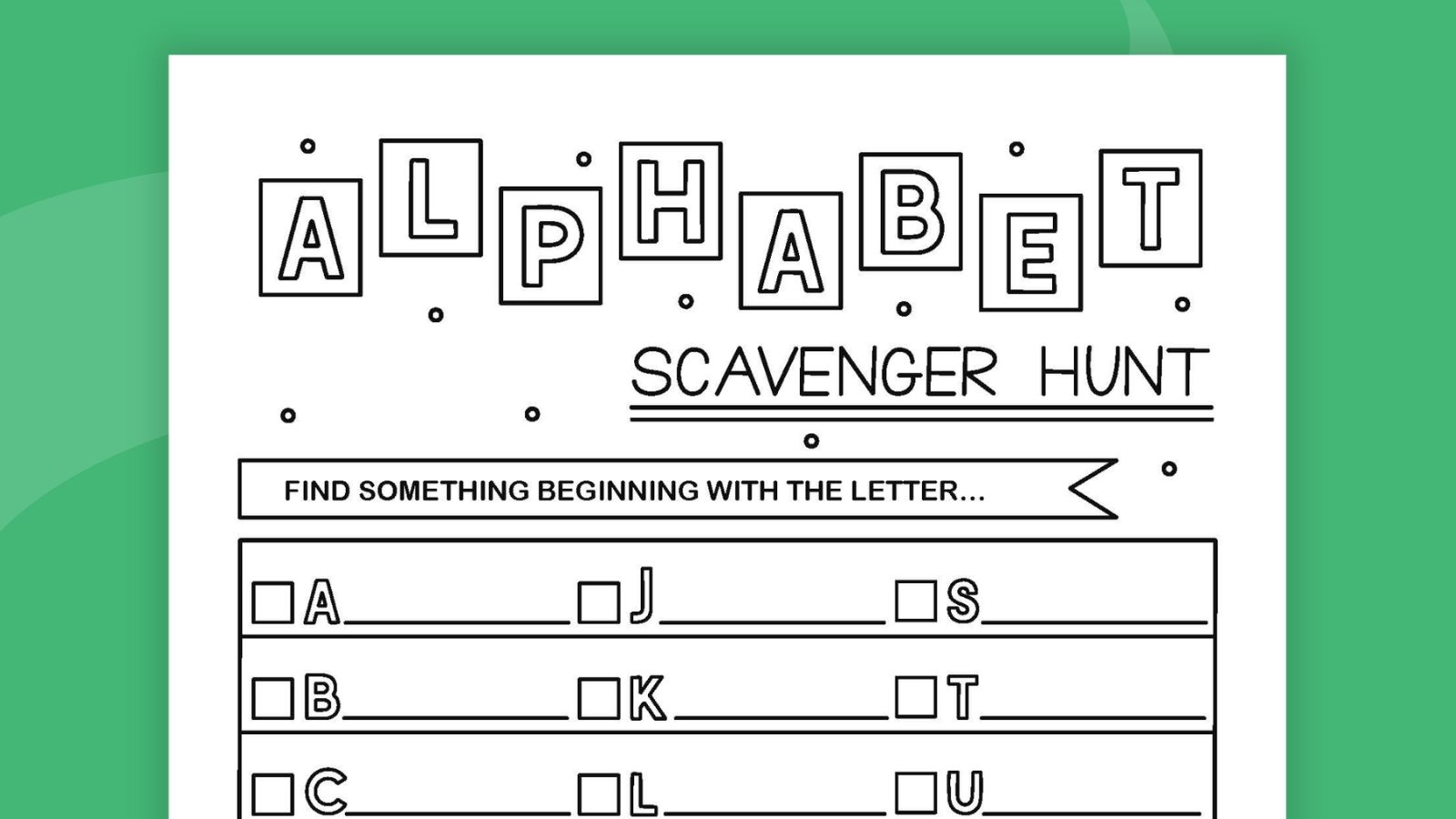
Alphabet Scavenger Hunt
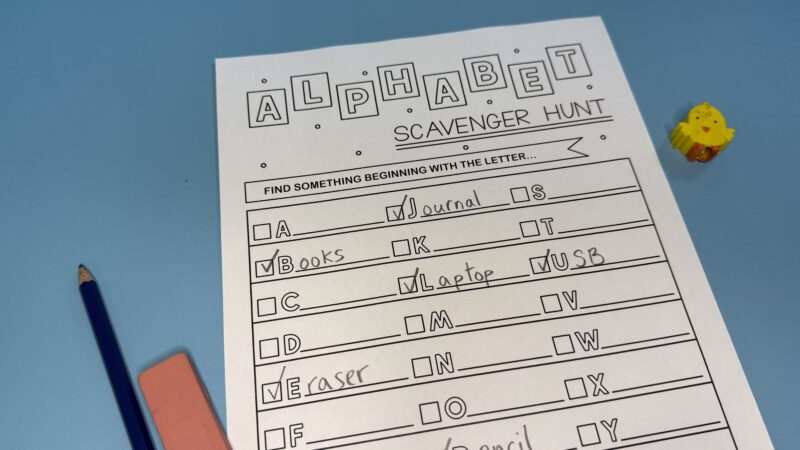
Before the game begins, give each student a checklist with each letter of the alphabet on it. Then, challenge them to find one object in the classroom that starts with each letter. Students can pair up to make the activity even more fun. Allow each student to have three “passes” for hard-to-find letters like X and Q. For extra fun, venture out into other areas of the school for another alphabet scavenger hunt.
Skills: Collaboration, beginning sounds, vocabulary
Spice Writing
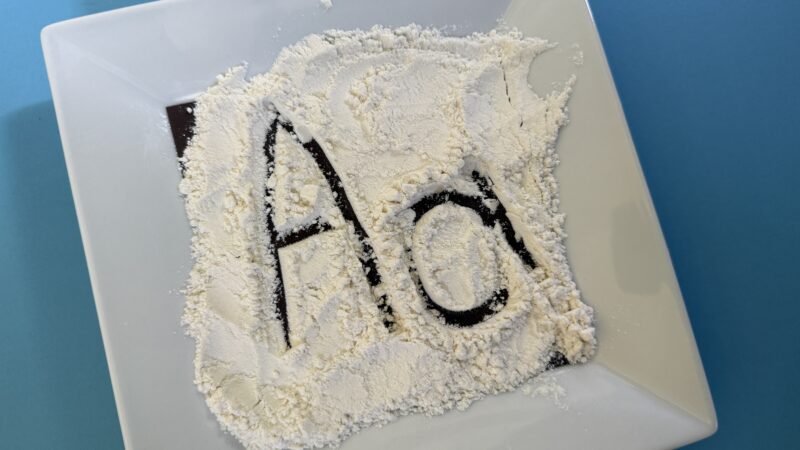
This one combines touch, smell, sight, and literacy learning. In a tray or on a paper plate, sprinkle a covering of a spice such as cinnamon, salt, pepper, basil, etc. Then, have students practice writing letters using letter cards or an alphabet chart to guide them.
Skills: Letter recognition, fine motor skills, multi-sensory learning
Alphabet Games
Roll and Match
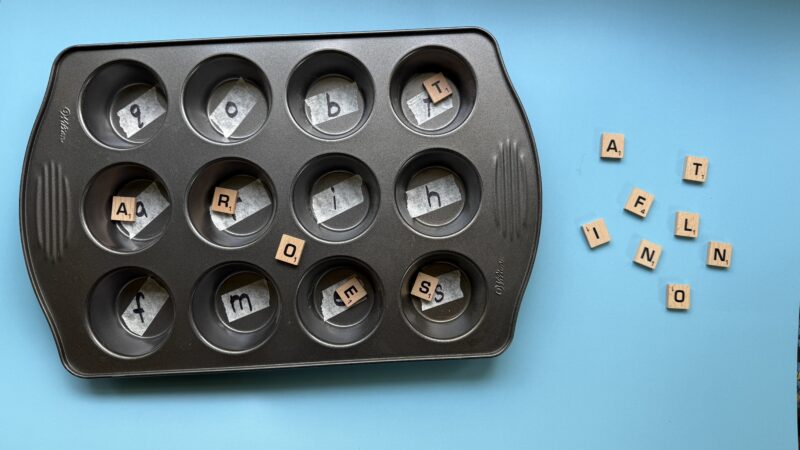
Label the bottom of a sectioned tray with lowercase letters. Each container may have different letters. Partner students up and give each pair a bag of matching uppercase alphabet tiles and sectioned tray. To play, students will take turns reaching into the bag, identifying the letter out loud, and matching it to the right section of the tin. When the first round is over, players can put all the tiles back, shake up the bag, and play again.
Skills: Letter recognition, matching uppercase and lowercase letters
Alphabet Soup
Divide students into groups of three or four. Give each student a spoon (e.g., a wooden compostable or plastic one). Give each group a bowl of plastic alphabet letters. Taking turns dipping their spoon into the “soup,” students will search for the letters in their name or simple words like cat, dog, go, etc.
Skills: Letter recognition, word formation, vocabulary
Letter Slap
Take a shuffled deck of alphabet cards and deal them out equally into two piles. Each player takes their top card and turns it over. The player with the letter closest to A wins the hand and takes the cards. If two of the same letter are played, the players (gently) slap their card. The first one to slap wins the hand. The game ends when one player holds all the cards. To make it more challenging, shuffle two decks together and play as above.
Skills: Letter recognition, visual discrimination, engagement
Movement Activities
Line Up
Give each student one index card with one letter written on it. Call out the ABCs one at a time and have students line up in alphabetical order. Continue until you get to the end of the alphabet. Try this activity with both uppercase and lowercase letters. To mix things up, start with the letter Z instead of A.
Skills: Letter recognition, phonemic awareness, cooperation, engagement
ABC Floor Mat
Invest in an inexpensive interlocking foam alphabet floor mat for your classroom, and use it for various alphabet activities. Kids can get down on hands and knees and practice tracing each letter with their finger. Or do a little one-on-one with a student and have them hop to the letters you call out.
Skills: Letter recognition, visual discrimination, phonemic awareness
Sky Writing
Model this activity first, and make sure you give students enough room. Call out a letter, then have students use big arm movements to “write” the letter in the air while saying the letter name and sound.
Skills: Letter recognition, large motor skills, recall
Animal Movements
Have students stand in a circle or by their desks. Pull a letter from a shuffled deck of alphabet cards and call out an animal action that starts with that letter. For example: S = Slither like a snake, F = Flap like a bird, H = Hop like a kangaroo, etc. Better yet, have students come up with an action.
Skills: Large motor skills, phonemic awareness, letter-sound correspondence
Alphabet Center Ideas
Alphabet Hide-and-Seek
Fill a sensory bin with sand, rice, or cornmeal and hide plastic alphabet letters inside. Students will pull a letter, identify its name and sound (out loud), and keep track of the letters they find on a whiteboard or piece of paper. Play with partners and challenge them to play until they’ve gotten all 26 letters.
Skills: Letter recognition, phonemic awareness, handwriting
Uppercase/Lowercase Match
To prep for this activity, count out 52 butter beans for each plastic zipper bag. On half of the beans, write all the uppercase letters. On the other half, write the lowercase letters. (This may be a good job for a classroom volunteer or to send home to parents who want to help.) When the sets are complete, use them to help students practice letter recognition by finding and matching the uppercase and lowercase letters.
Skills: Letter recognition, matching skills, small motor skills
Alphabet Beads
Form a pipe cleaner into a long letter J (this is to keep beads from falling off the end). To play, students pick an alphabet bead, say the name and the sound of the letter out loud, then thread it onto their pipe cleaner. When the pipe cleaner is filled up, they empty the beads back into the bowl. This is a fun activity to do with partners (great for taking turns) or small groups. For more fun alphabet bead ideas, check out Awesome Ways To Use Alphabet Beads for Learning.
Skills: Letter recognition, phonemic awareness, small motor skills
Shaving Cream Letters
Squirt shaving cream on a table or on each student’s desk. Have them spread it around so it covers an area about the size of an 8.5 x 11 sheet of paper. Then, call out a letter and have them draw it in the shaving cream with their pointer finger. For the next letter, they smooth out the shaving cream and start again. Bonus: Their hands and your table will be cleaner than ever! (If the thought of doing this directly on desks makes you squeamish, use cookie sheets or paper plates.)
Skills: Letter recognition, handwriting, multi-sensory learning
Pipe Cleaner Letters
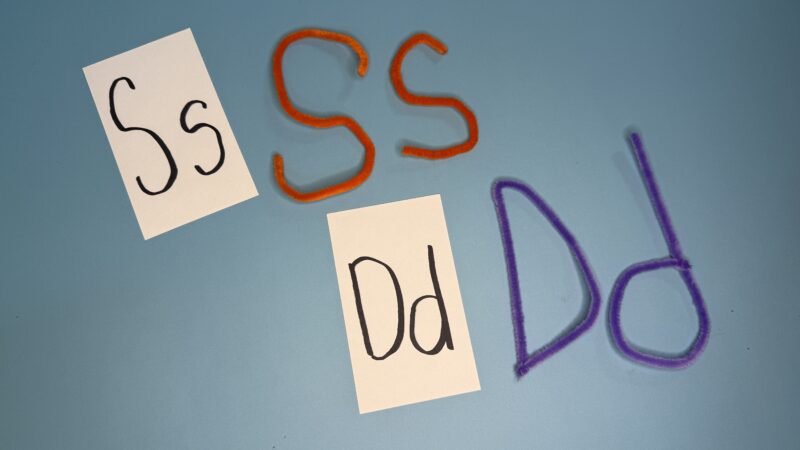
Call out a letter and indicate uppercase or lowercase. Students then create that letter with a pipe cleaner. Once they think they’ve got it, have them hold it up for approval. Alternately, use this as an independent center activity with pipe cleaners and alphabet cards. Students will pull one card at a time, then make that letter with their pipe cleaner. If you’d like, have them keep track on a tracking sheet.
Skills: Letter recognition and formation, phonemic awareness
Sponge Letters
Cut sponges into the shapes of letters. Students can use them at the water table to make words, or they can dip them in paint and make prints on newsprint or scrap paper.
Skills: Letter recognition, beginning and end sounds, visual discrimination
Egg Letter Match
Use a Sharpie or letter stickers to mark an uppercase letter on one half of each plastic egg and a lowercase letter on the other. Then separate each egg into two and throw them all in a basket. The object of the game is to pull out two halves and try to make a match. Tip: Add difficulty by using different-colored tops and bottoms.
Skills: Matching, letter recognition, fine motor skills
Loose Parts Letters
Loose parts are exactly what they sound like: a collection of loose materials such as small pebbles, bottle caps, seeds, keys, etc. Using letter cards as a guide, kids line up loose parts on their table or desk to form the letter.
Skills: Letter formation and recognition, fine motor skills, creative activity
Stamped Letters
Give each student a plastic zipper bag with a blob of play dough inside and a selection of letter stampers (easily found online or at teacher supply stores). Roll or push play dough into a flat circle and stamp letters and words right into the dough. When the dough is used up, simply roll it out and start again.
Skills: Fine motor skills, letter recognition and formation
Independent Alphabet Activities
Alphabet Tracing Strips
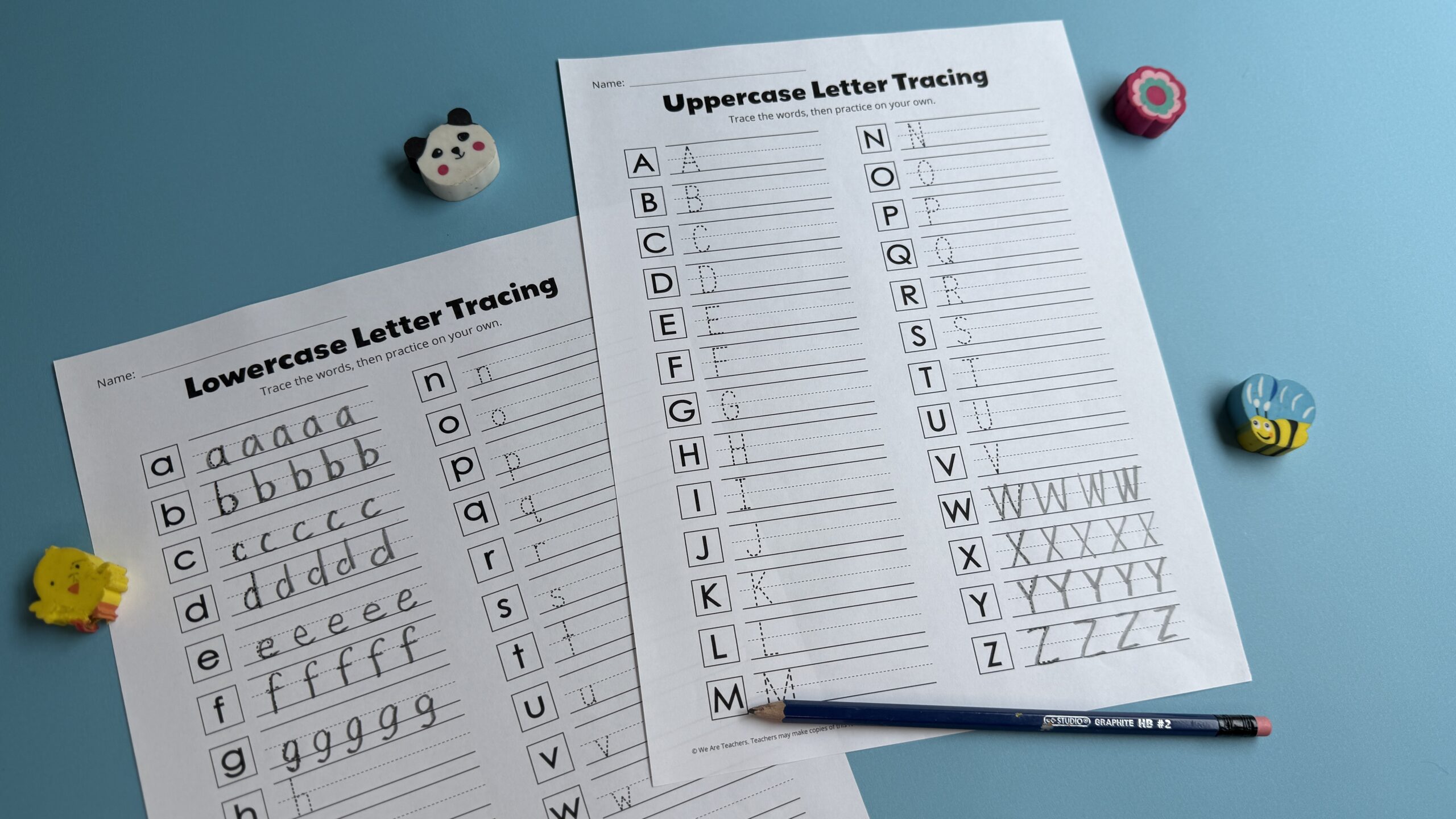
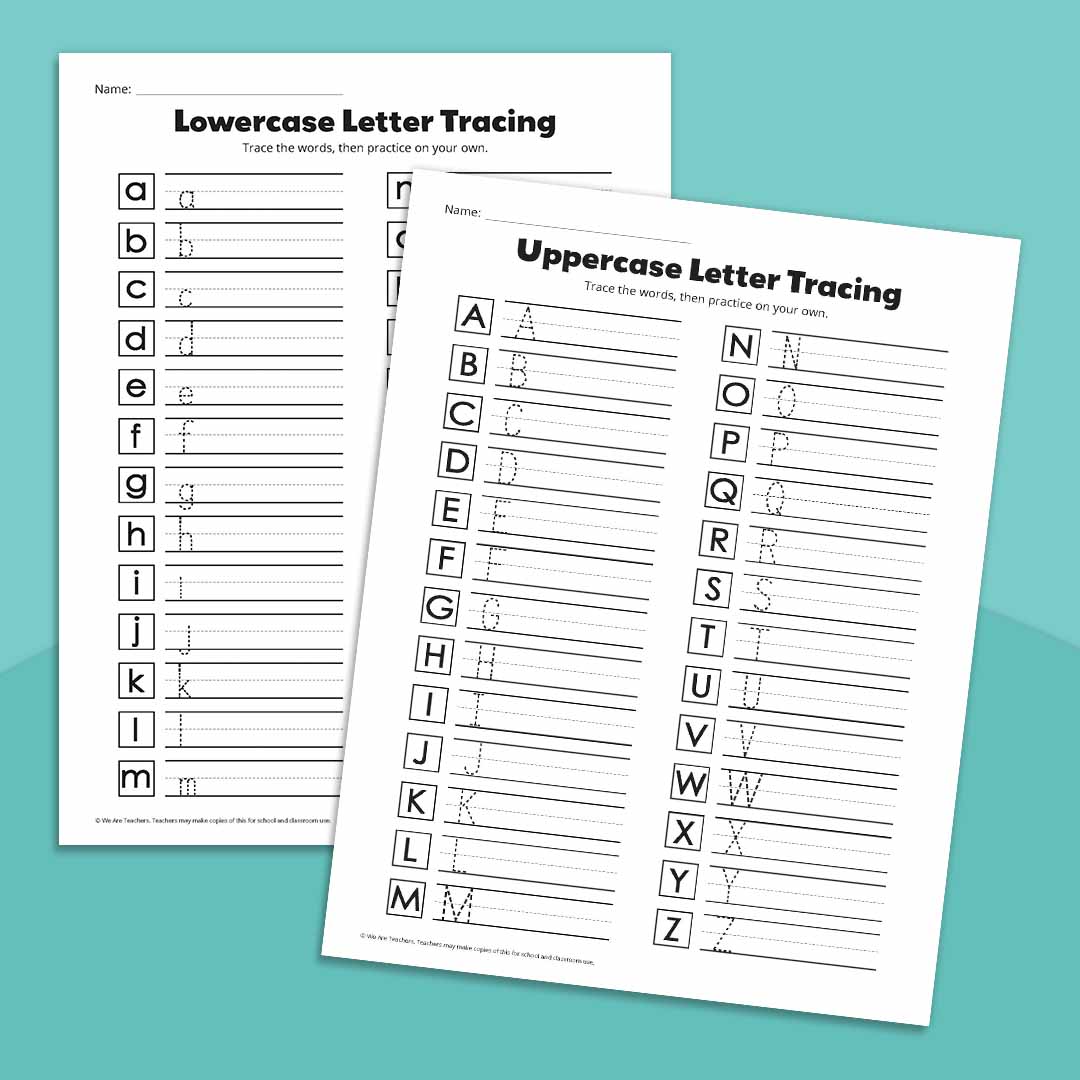
Teaching proper letter formation is absolutely key in the early grades. So if you’re a pre-K, kindergarten, or 1st grade teacher, our free bundle of letter-tracing worksheets is for you! Each letter-tracing worksheet shows the uppercase and lowercase letter with arrows showing how they should be formed. There are two lines of practice each for uppercase and lowercase. Each worksheet also has three simple words that start with each letter for students to trace, along with small pictures that they can color.
Skills: Handwriting, letter formation
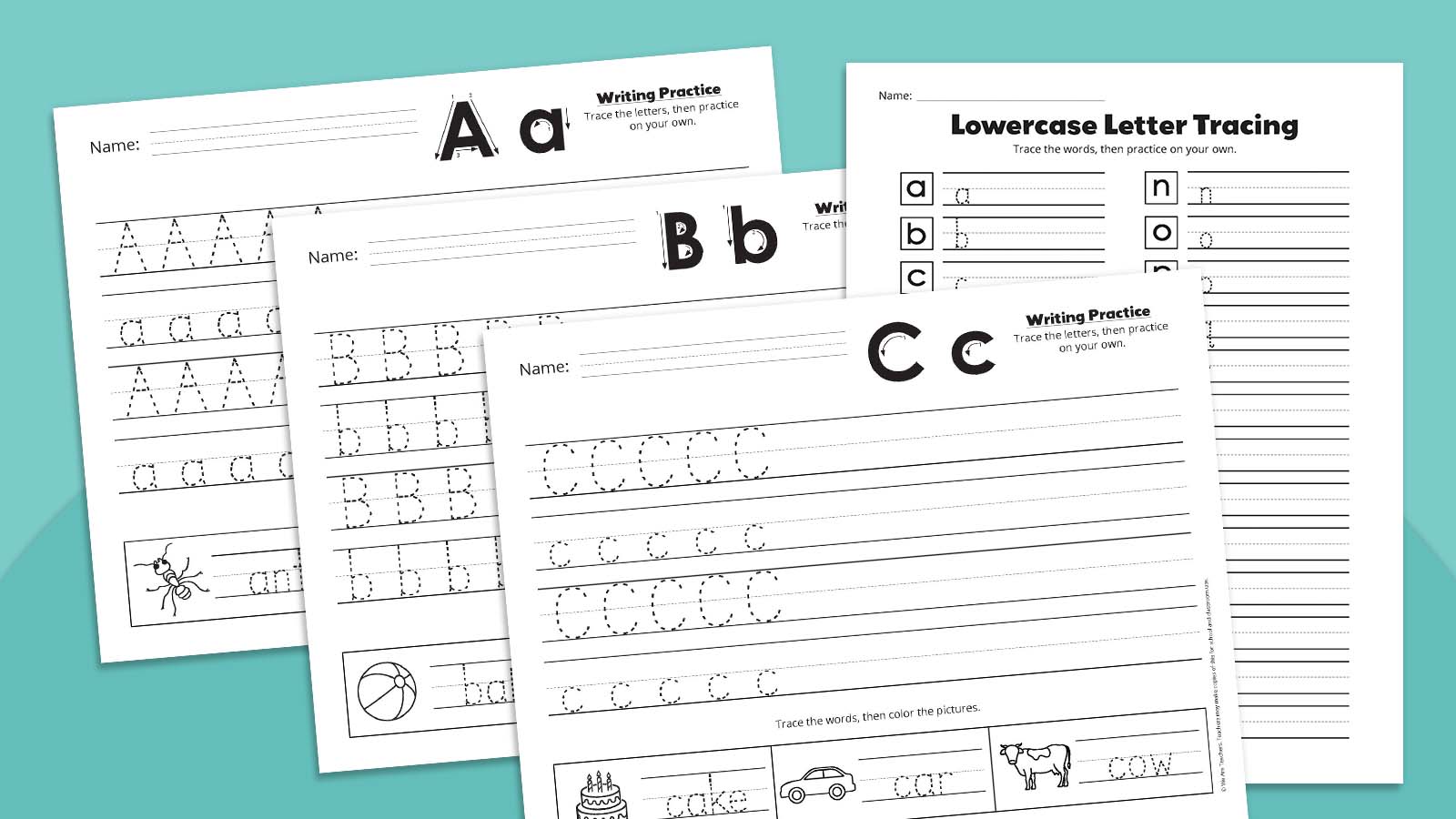
Letter-Tracing Worksheet Bundle (Free Printables)
Print our practice sheets and give students a tool to practice their letters from A to Z, lowercase and uppercase.
Snap Cubes
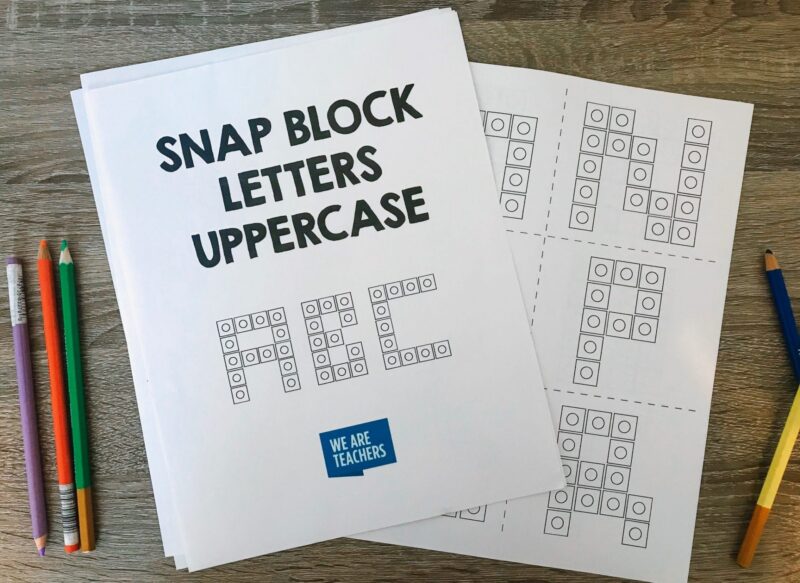
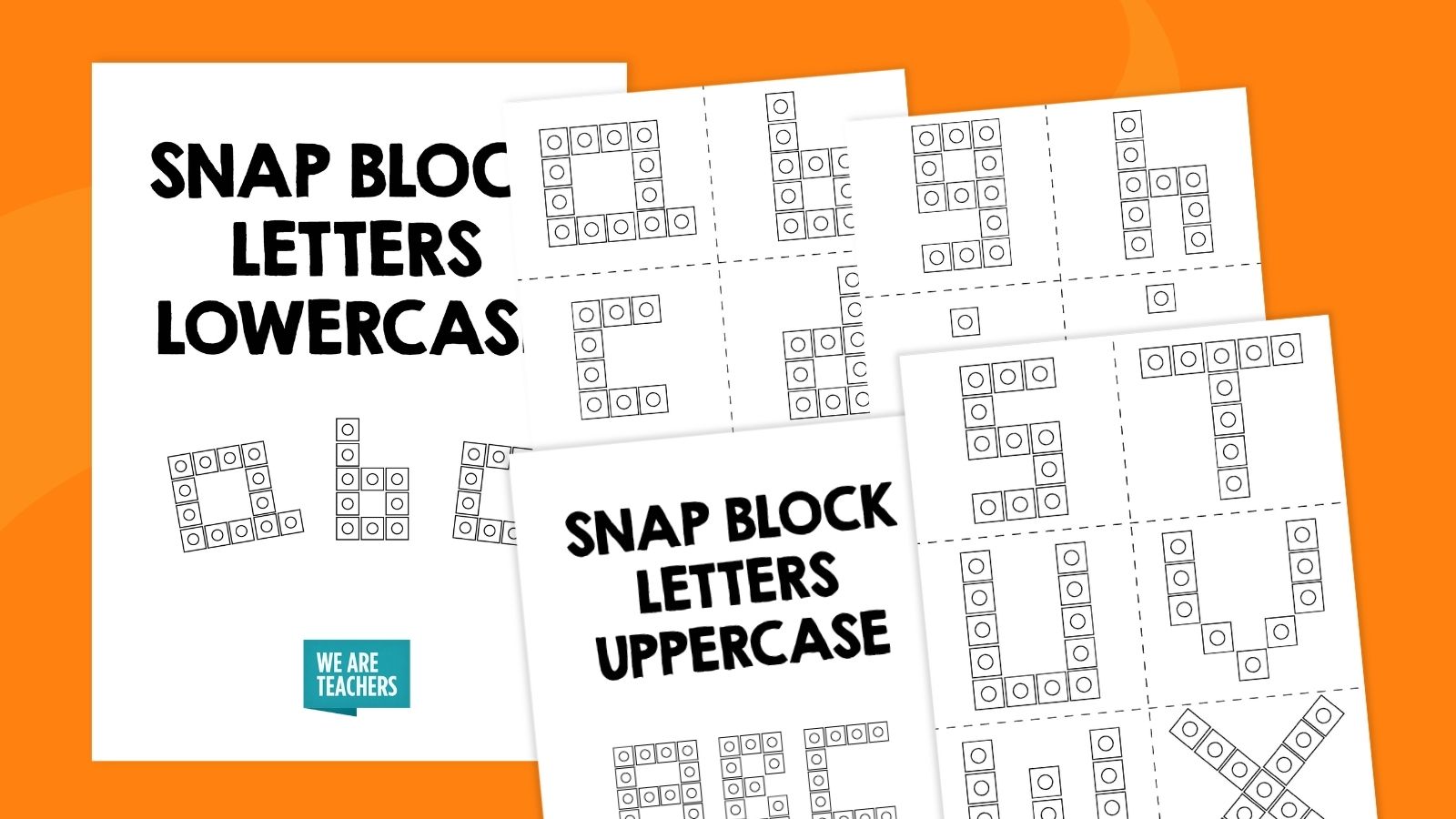
Download our snap block alphabet printables. Featuring both uppercase and lowercase alphabets, they’re free to download and print. You can print out a few sets and put them together in loose-leaf binders.
Skills: Letter recognition, fine motor skills
Highlight Letters
Print out pages of text or have a stack of kid-appropriate magazines or newspapers on hand. Give each student a highlighter and have them go on a letter hunt, highlighting a particular letter every place they find it. This activity is also great for sight word recognition.
Skills: Visual discrimination, letter recognition
Name Puzzles

Write each student’s name on colored index cards. Cut the card into pieces (one letter per piece) using a simple zigzag pattern. Put each name in a zipper plastic bag. Pass out the bags and have students dump out the pieces and put their name puzzle back together. Once they’ve done their own a few times, let them trade with friends to practice more.
Skills: Letter recognition, vocabulary
Creative Alphabet Activities
Cotton Swab Painting
Give each student a piece of 8.5 x 11 card stock and have them write a line of letters on each line with a pencil. Then, pull out the paint and cotton swabs. Students will have fun dipping the swabs in paint and dotting along the lines of the letter.
Skills: Letter recognition and formation, fine motor skills, creative play
Watercolor Letters
Using a white crayon, draw letters on pieces of white paper. Give each of your students a sheet and a set of watercolors. As they paint over the (nearly invisible) crayon marks, letters will magically appear.
Skills: Letter recognition, visual discrimination
Musical Alphabet
Lay letter cards on the floor in a big circle. Then, have students sit in a circle around the letters. Play some music and choose one child to walk around the inside of the circle. When the music stops, have that child name the closest letter. Expand on it: Ask the child to name three things (colors, animals, etc.) that start with that letter. Continue until all students have a turn.
Skills: Beginning sounds, letter recognition, engagement
Crafty Letter Cards
Make or print out bubble letter cards and pass them out. Students will fill in the letter with washable glue. Next, stick rice, lentils, pom-poms, beads, or any other small items into the glue. Put cards aside to dry and display them the next day.
Skills: Letter practice, fine motor skills, creative play
Sing Songs
Everyone loves to sing “The Alphabet Song,” but did you know there are lots of other versions? Search YouTube for kids’ alphabet songs and start a sing-along. (Be sure to screen the songs before sharing with your students!)
Skills: Phonemic awareness, oral language, letter-sound correspondence
Creative Letter Drawings
Letters of the alphabet are a great starting point for creative drawings. Choose a letter and write it on a large piece of paper. Next, embellish the outline with a drawing of a person, animal, or object. For example, turn the letter S into a snake or the letter C into the moon, etc.
Skills: Creative play, letter formation, fine motor skills
Outdoor Alphabet Activities
Chalk Art
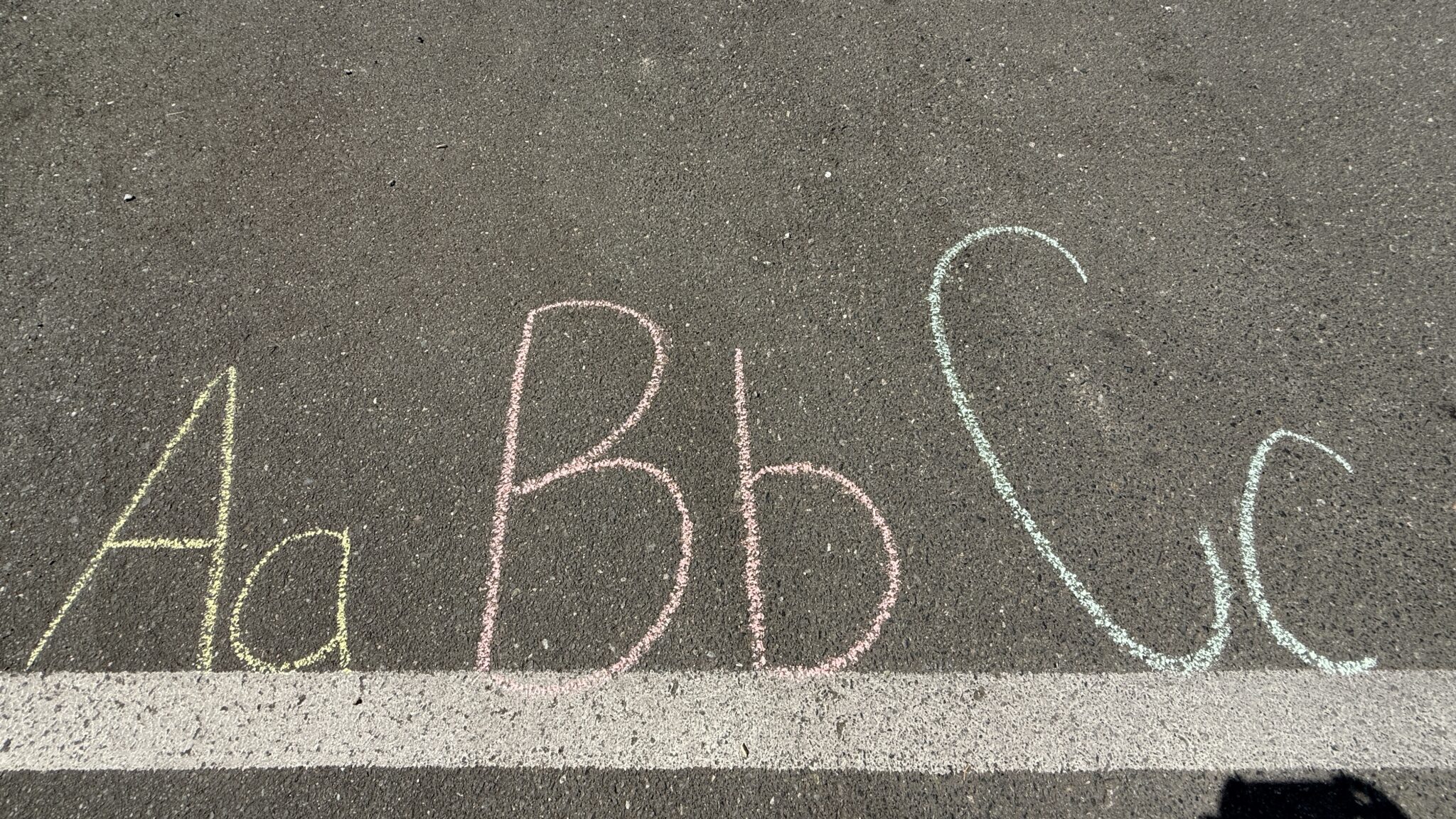
Take your little ones outside and practice writing letters with sidewalk chalk using letter cards attached to an O-ring to work from. Have them write both lowercase and uppercase letters or write out the whole alphabet.
Skills: Letter recognition and formation, phonemic awareness
Spray Bottle Letters
A fun activity to do after chalk drawing. Have students say each letter aloud, then use a squirt bottle to trace the letter, erasing it from the concrete.
Skills: Fine motor skills, creative play, engagement
Nature Objects
Take a nature walk and collect natural objects like sticks, leaves, grass, and small rocks. Use the collection to form letters on the sidewalk or blacktop. Alternatively, students could bring them inside and glue them onto letter cards.
Skills: Creative play, letter recognition, fine motor skills
Get your free letter-tracing worksheets!
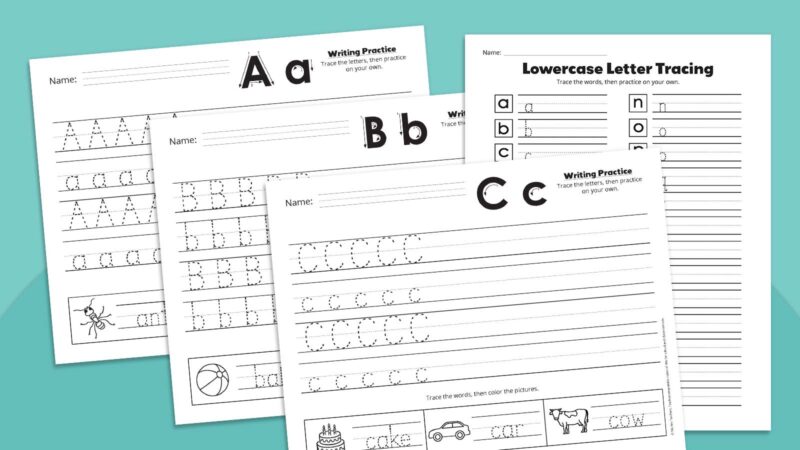
Ready to incorporate the ABCs in your classroom or at home? Grab our free printable letter-tracing worksheets! Just click the button below and fill out the form to get them.