
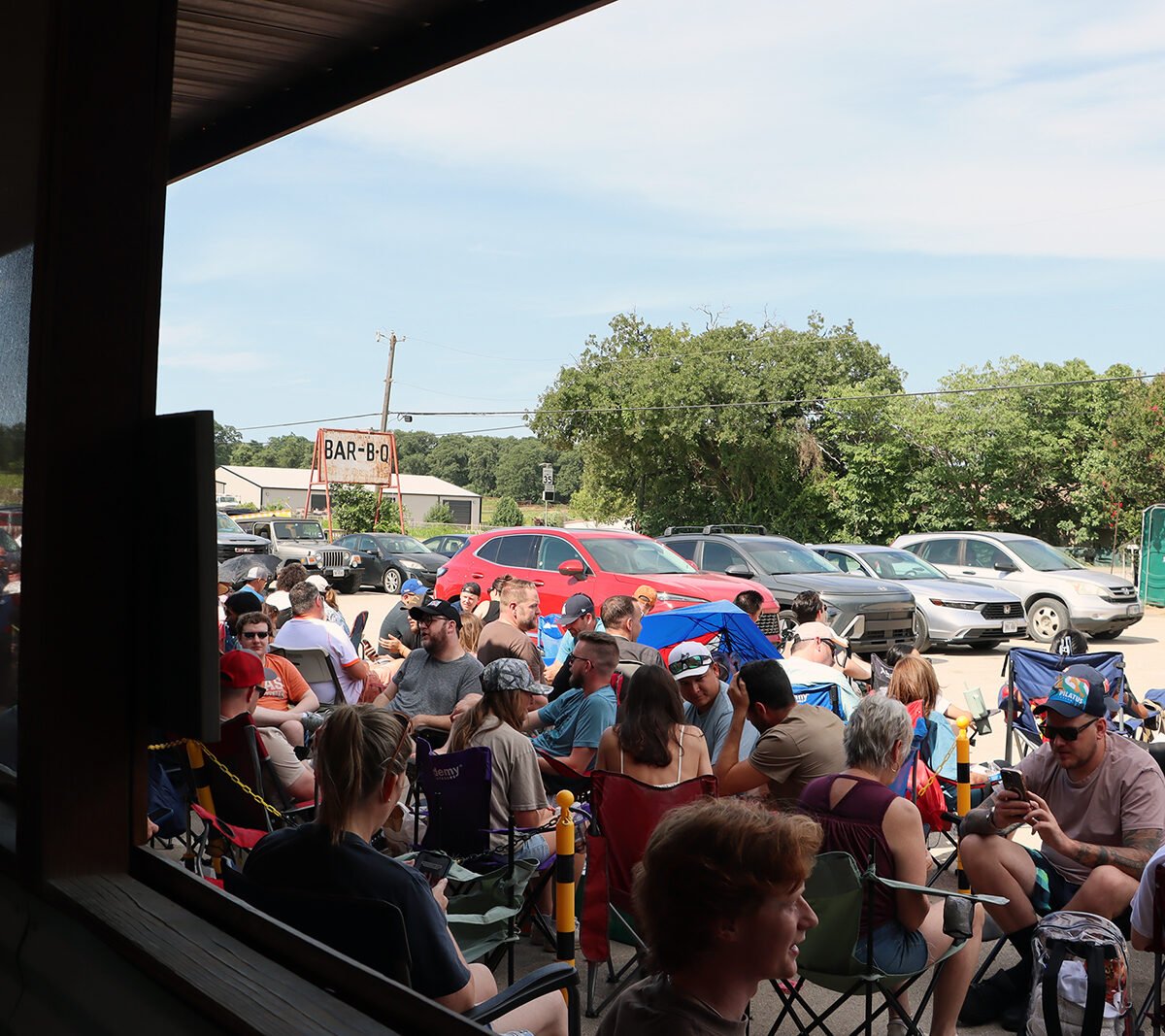
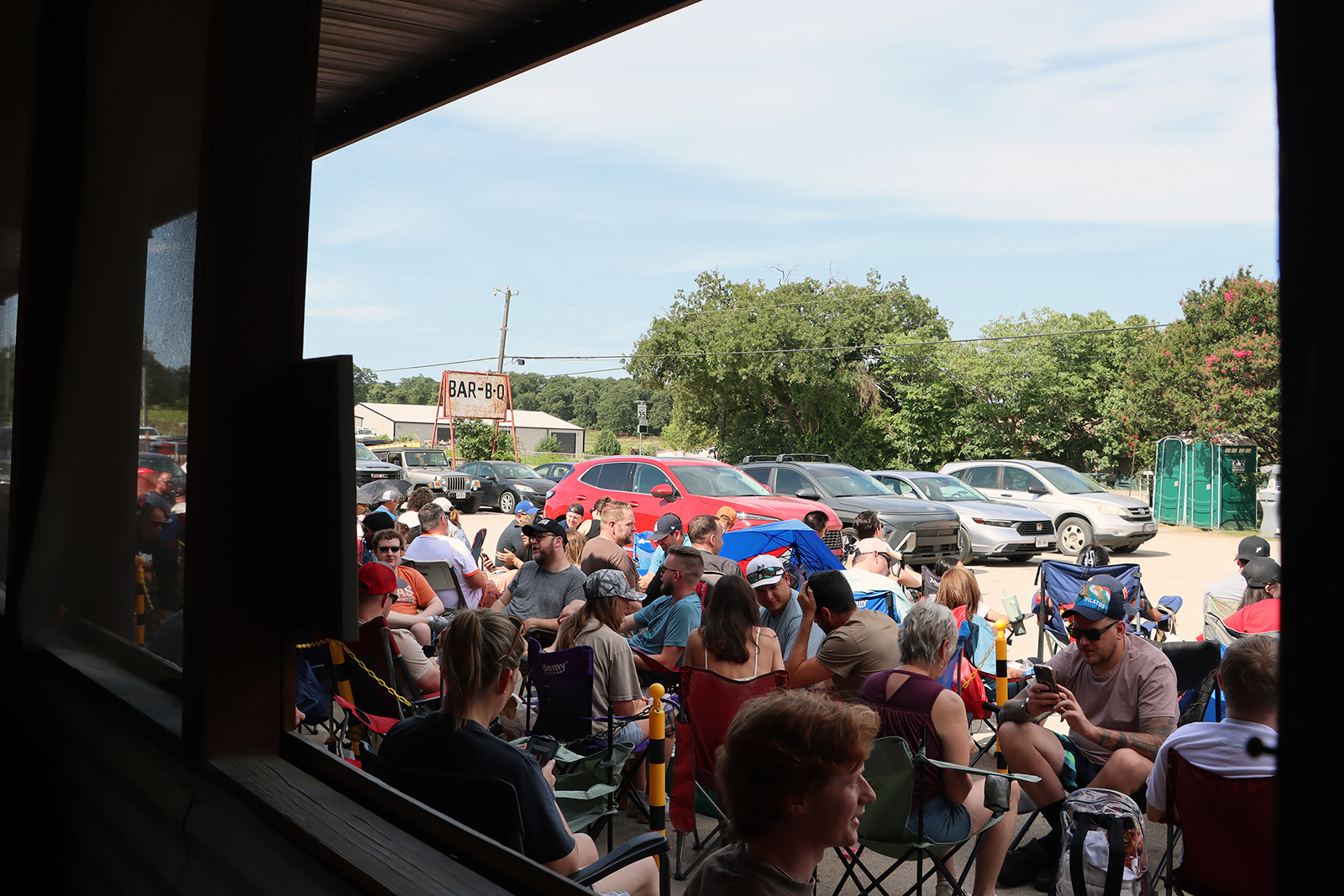
FORT WORTH, Texas (RNS) — At 9 a.m. on a scorching Saturday in June, nearly 100 people were already lined up outside Goldee’s BBQ, a small, wooden-shack restaurant.
First in line was 30-year-old Thanh Huynh, who sat in a lawn chair on the joint’s rustic porch since 6:30 a.m.
“I have, like, a whole list, and I’m going to spend lots of money here. It’ll be worth it,” he said, laughing while rattling off a long order of meats and sides from his phone’s Notes app as a sweet, smoky scent from nearby pits hung in the air.
Opened in 2020 by a group of his friends, the restaurant was named the No. 1 barbecue spot in the state by Texas Monthly a year later, and then won a Bib Gourmand award from the prestigious Michelin Guide, given for “great food at a great value.”
The restaurant serves classic Texas barbecue like craft pork belly, sausage and ribs. But it also offers halal brisket, turkey and lamb — meat raised and butchered in accordance with Islamic guidelines.
At a time when Republican leaders are increasingly targeting the state’s growing Muslim communities, halal barbecue joints like Goldee’s are thriving in Texas. Across the state, Muslim pitmasters are gaining recognition for putting their own spin on one of Texas’ most iconic culinary traditions.
At least a dozen barbecue spots now serve halal meats, including Yearby’s Barbecue & Waterice, run by Black Muslim couple CJ and Sabrina Henley, soon-to-be in Plano, and Levant Mediterranean BBQ, a restaurant with locations in Houston and Frisco and whose all-beef menu includes a brisket shawarma sandwich.
“Now there are so many options, and for us to have highly rated barbecue, it’s a blessing,” said Haris Ghaffar, who drove an hour from Celina and stood in 90-degree weather for nearly two hours with a friend for the halal options at Goldee’s.
Growing up in the 1990s, Ghaffar said a McDonald’s Filet-O-Fish sandwich was one of the few halal meals he could eat while dining out. Back then, halal food was seen as serving a small community. Today, it’s a multibillion-dollar industry that’s part of the American culinary mainstream, said James Beard Award‑winning food writer Farhan Mustafa, who wrote about the rise of American halal barbecue for Bon Appétit magazine in 2025.
“Halal food is American food,” said Mustafa, who is based in Seattle. “It belongs on your plate. It belongs in the casual chat. It belongs in hip hop tracks. It’s the most American thing there is.”
Halal food is American food. It belongs on your plate. It belongs in the casual chat. It belongs in hip hop tracks. It’s the most American thing there is.
Farhan Mustafa, food writer
Mustafa said Muslims are part of a growing list of communities putting their stamp on Texas barbecue. “Whether they’re first, second or third-generation Muslims or Muslim Americans or just Americans, they’re bringing what they know and what excites them,” he said.
Texas barbecue is typically defined by salt-and-pepper brisket and pork ribs, but this new crop of halal pitmasters are adding inventive twists, often based on their own family heritages.
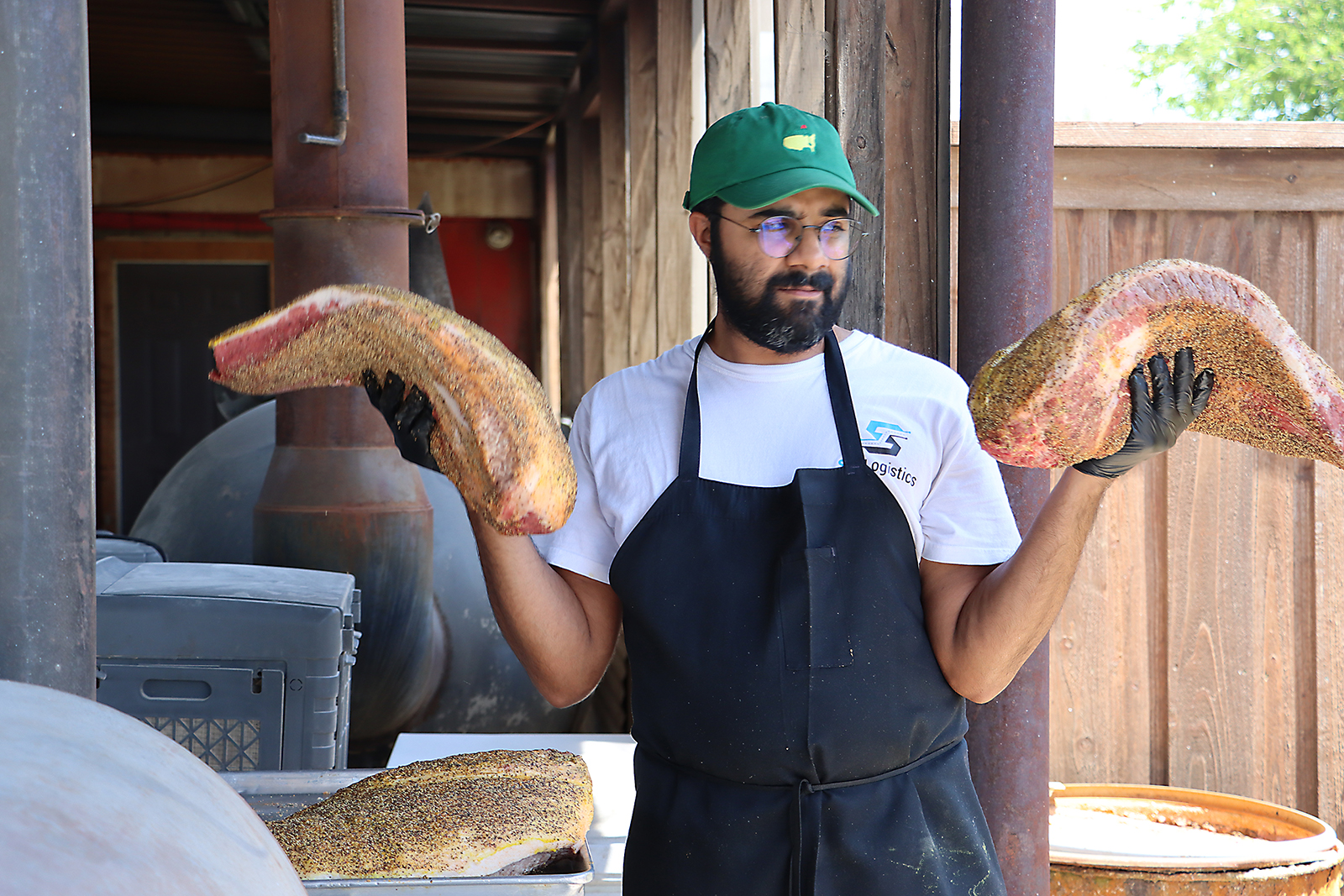
Zain Shafi, a pitmaster and co-owner of Goldee’s, previously ran Sabar Barbecue, a food truck that offered Pakistani-infused halal dishes, such as brisket with rub that included spices like bay leaf and coriander. He brought tandoori smoked turkey to Goldee’s menu. And sourcing halal cuts, he said, was a natural choice because they are “the highest quality” meats.
Goldee’s chef and part owner Nupohn Inthanousay also blends his Laotian heritage, serving a smoked Lao “sai oua” sausage with sticky rice and a fiery, tangy dipping sauce.
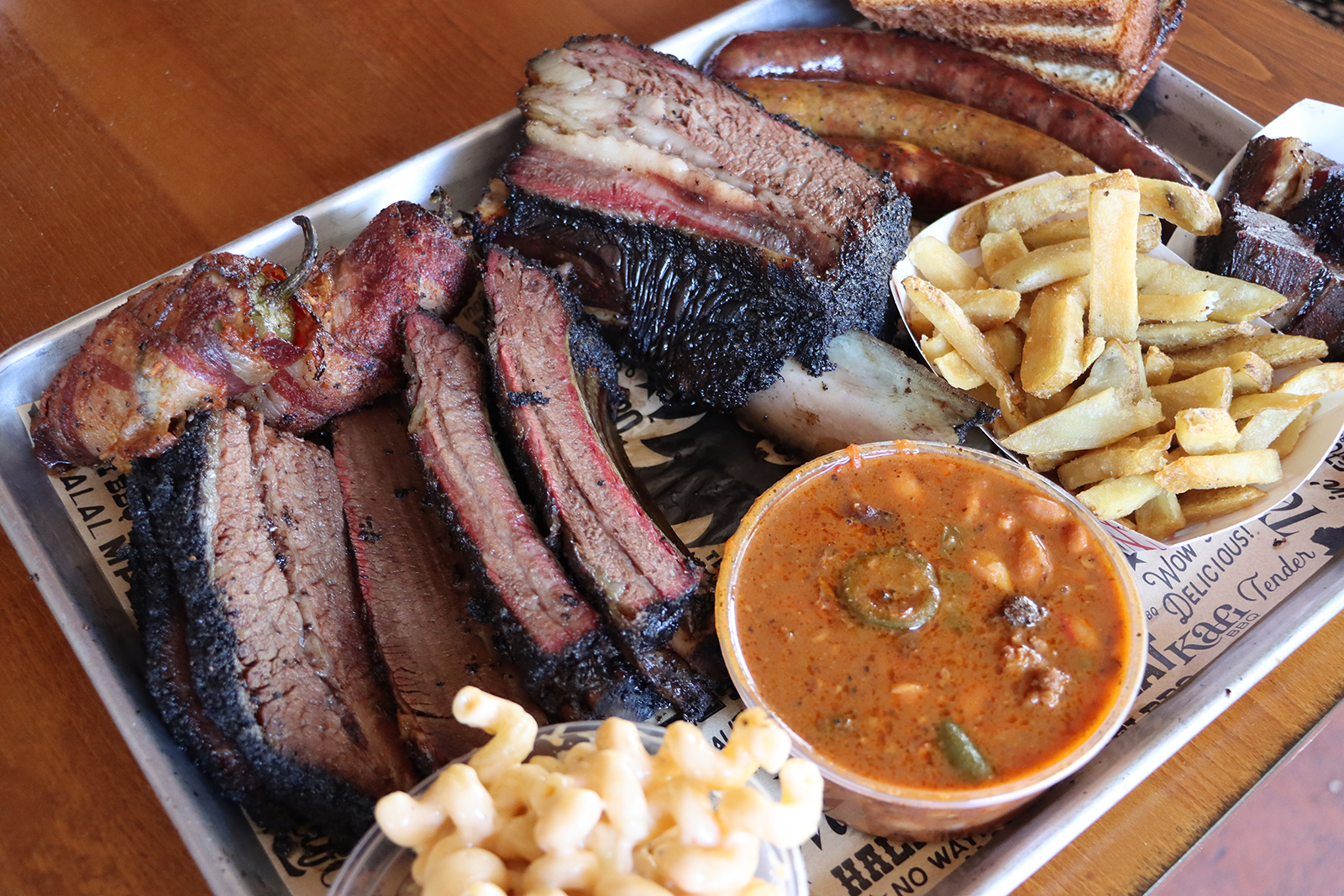
A selection from the Kafi BBQ menu, Sunday, June 28, 2026, in Irving, Texas. (RNS photo/Ulaa Kuziez)
At Kafi BBQ in Irving, owner Salahodeen Abdul-Kafi brings halal Wagyu beef and Iraqi spices to classic Texas barbecue, challenging what he said is the “traditional old guard of Texas barbecue.”
“My goal at Kafi BBQ is to make the best barbecue in Texas,” Abdul-Kafi said. “I have not been shy about that at all, and making the best barbecue in Texas does not necessarily have to include pork.”
A former Silicon Valley tech worker, he moved to Texas six years ago in search of a Muslim community. On weekends in his backyard, he smoked brisket for friends. By 2024, he bought a smoker and opened Kafi BBQ.
He said he spent months testing and perfecting recipes and finding local producers. Abdul-Kafi attributes his obsession with crafting a stand-out menu to the Islamic concept of “Ihsan”– an Arabic term meaning doing something with excellence for the sake of God.
On a Sunday afternoon this summer, the restaurant’s red booths were packed with diners, drawn to menu items like the 13-spice Wagyu brisket, pomegranate-glazed beef belly burnt ends and Iraqi-inspired spicy beef sausage.
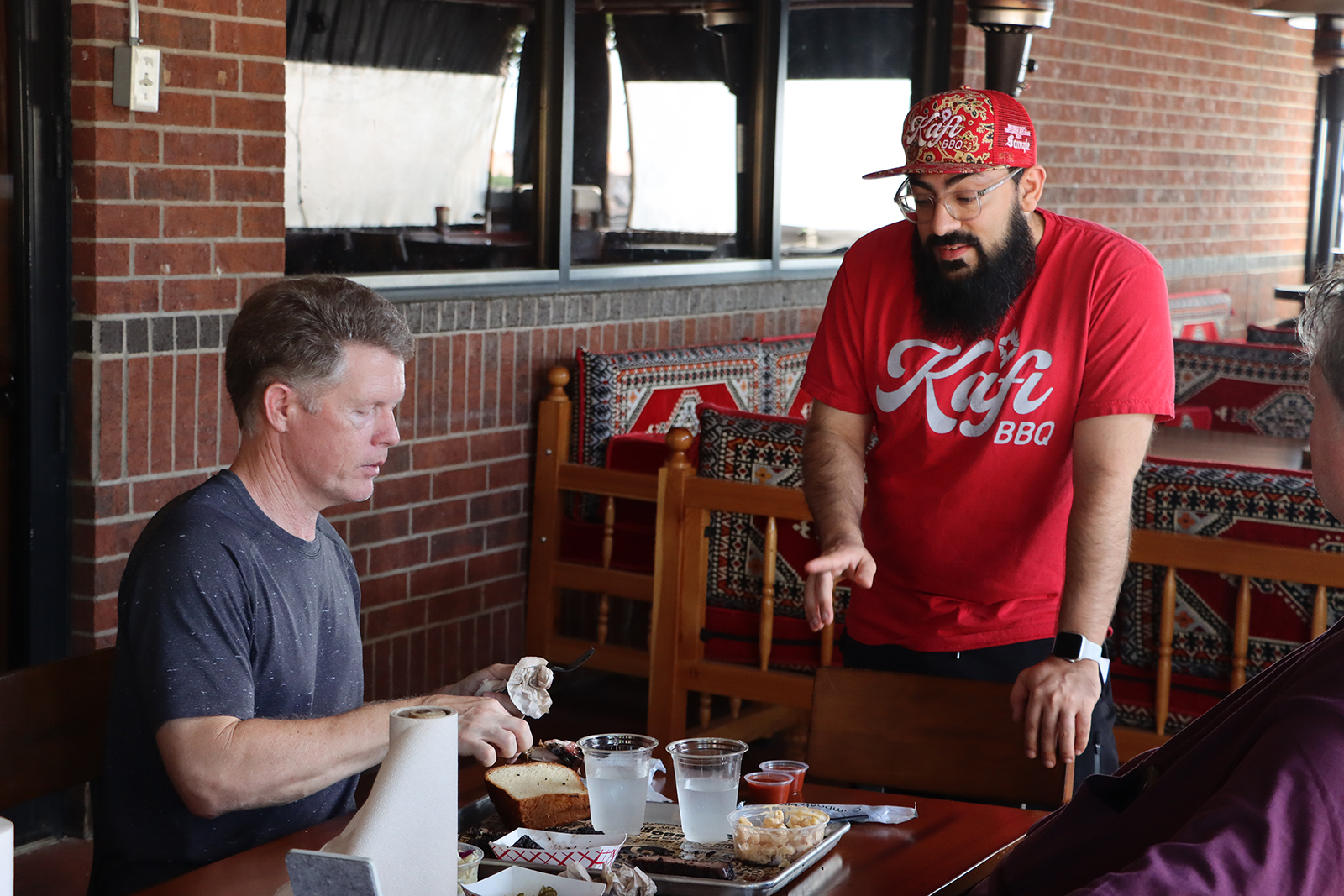
“That sausage, I’d probably put it at the top sausage I’ve ever had, and we eat barbecue a lot. This place is unique,” said Jonathan Tate, a Fort Worth resident who came to Kafi BBQ with a friend after reading about it on a Facebook foodie group.
“I don’t necessarily have to have it halal, but it’s nice to know they took good care of the food, the meat,” his friend Jon Sklar said, before going back in line to order oxtail.
Although political rhetoric against Muslims in Texas has become increasingly hostile – some GOP lawmakers even discussed a ban on halal food at a conference this month – pitmasters like Abdul-Kafi see the rise of halal barbecue as an effective counterargument.
“It’s an example of exactly the opposite of what the Islamophobes talk about, right?” he said. “They say, ‘oh, Muslims don’t integrate, they stay alone, they don’t help society and all this stuff.’ And it’s like, I’m sitting here contributing to the most well-known cuisine of Texas.”
One of the diners at Kafi BBQ, Houston native Muhammad Sohail, 23, said the restaurant reflects who he is — a proud Texan and Muslim. “This place is super important because I can see halal within the culture of Texas, which is my culture at this point,” Sohail said. “We love the food. We love meat. We’re Muslims and we love barbecue.”
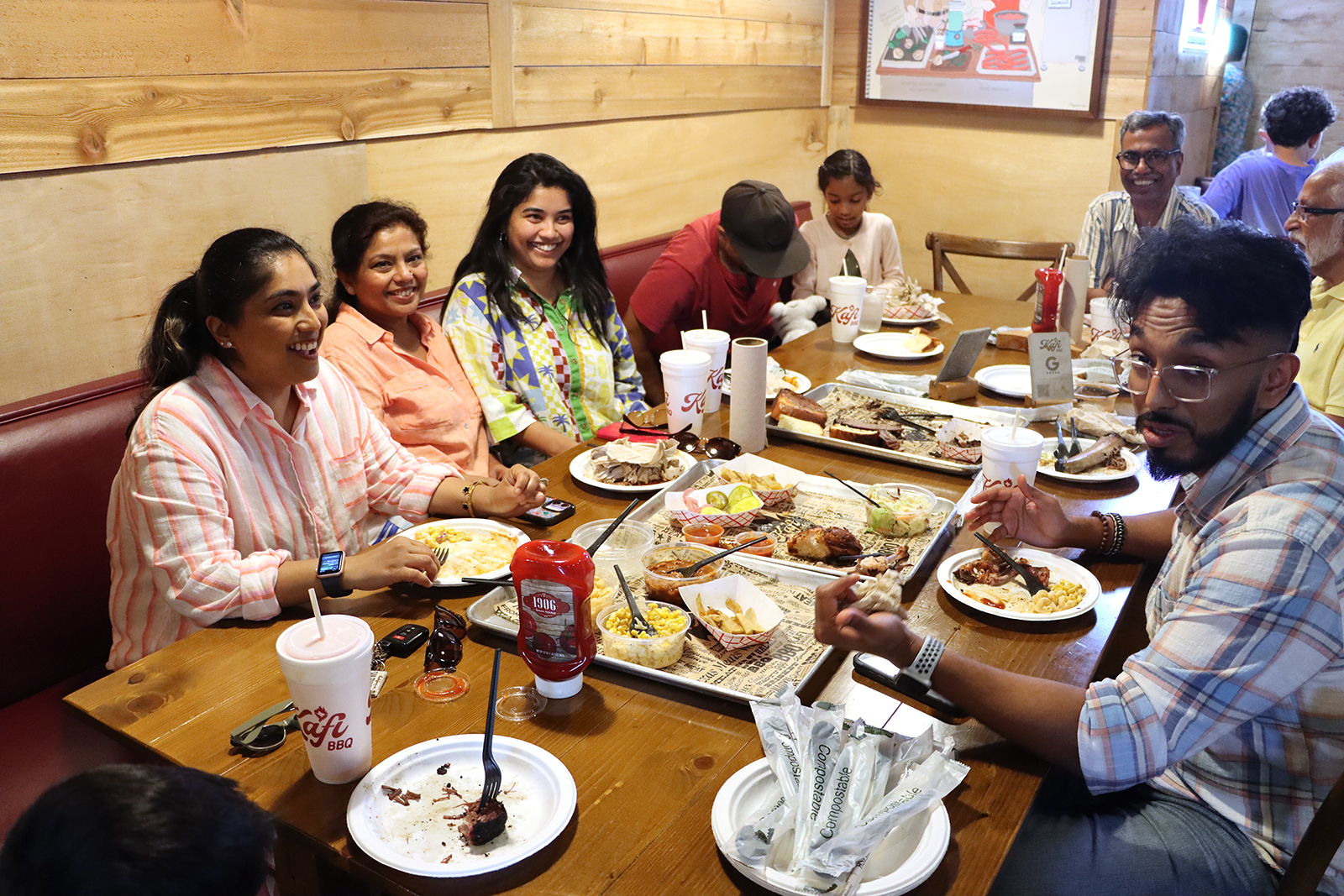
After finishing a big lunch with 10 relatives, Areeba Ali, a Dallas native of Indian heritage, said the restaurant’s appeal cuts across communities, which she said is evidence that halal barbecue isn’t a niche but resonates broadly with Texans. “If you look around in the restaurant, you see everybody in there – it’s not just one demographic in there,” Ali said.
For Mustafa, that success is ultimately a testament to the resilience of Muslim American communities.
“No matter how much they try to erase us, our food is here to stay,” he said. “You will see the power of just good food and the fact that most people really seem to understand that this is just as American as anything else.”
Fiona André contributed to this report.