

This was an interesting experiment – last week, we asked you “how long do you plan to keep your current phone?” and some of the data shows what we expected to see, but there were a couple of surprises too.
Here are the results – we calculated the average and the median replacement time (in years) for each of the three categories, flagship, mid-range and entry-level. The one-sentence summary is “entry-level phones get replaced every three years, higher-end phones every four years”.
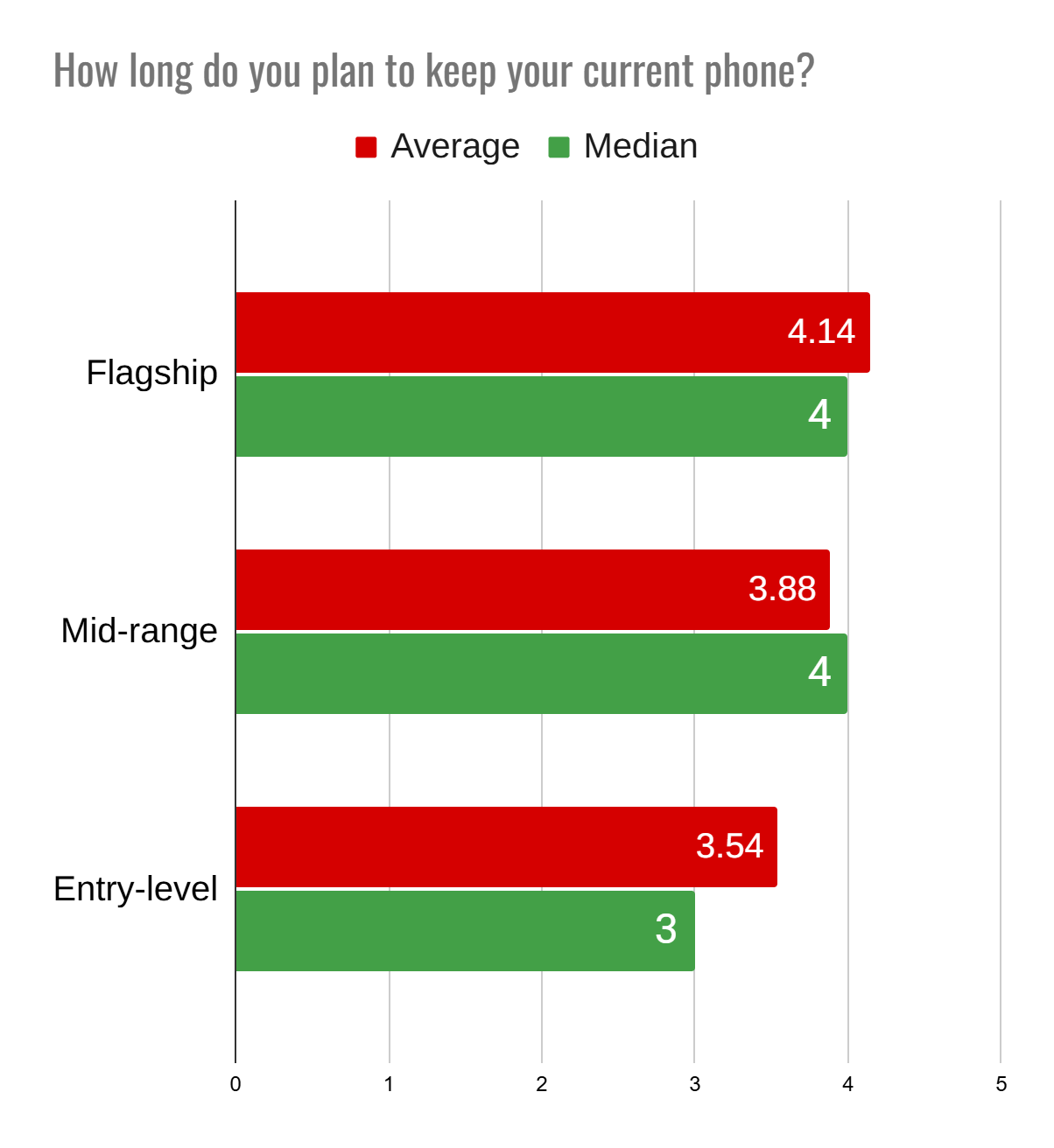
Now let’s dig in deeper, starting with flagships. The average is slightly higher than the median – 1,242 voters or 23% of flagship owners (this was the biggest voting block in the entire poll) say they plan to keep their phones for at least 6 years, which skews the results towards longer ownership.
As for mid-rangers, the average is lower than the median – while very few people replace their mid-ranger every year, quite a few change theirs after 2 or 3 years. This means that the Average Joe keeps their mid-range phone as long as others keep their flagship, but there are quite a few people that upgrade sooner.
Predictably, the entry-level segment sees the fastest turnover – low-end specs age faster. This category sees the biggest discrepancy between average and median, skewed by a solid number of die-hards (507 or 21% of entry-level phone owners) who plan to keep their current phone for at least 6 years.
As a reminder, we ran a similar poll in 2020 and the results showed that most people change their phone after 3 years, though 2 years was the second most common upgrade period. The upgrade cycle has clearly grown longer since then.
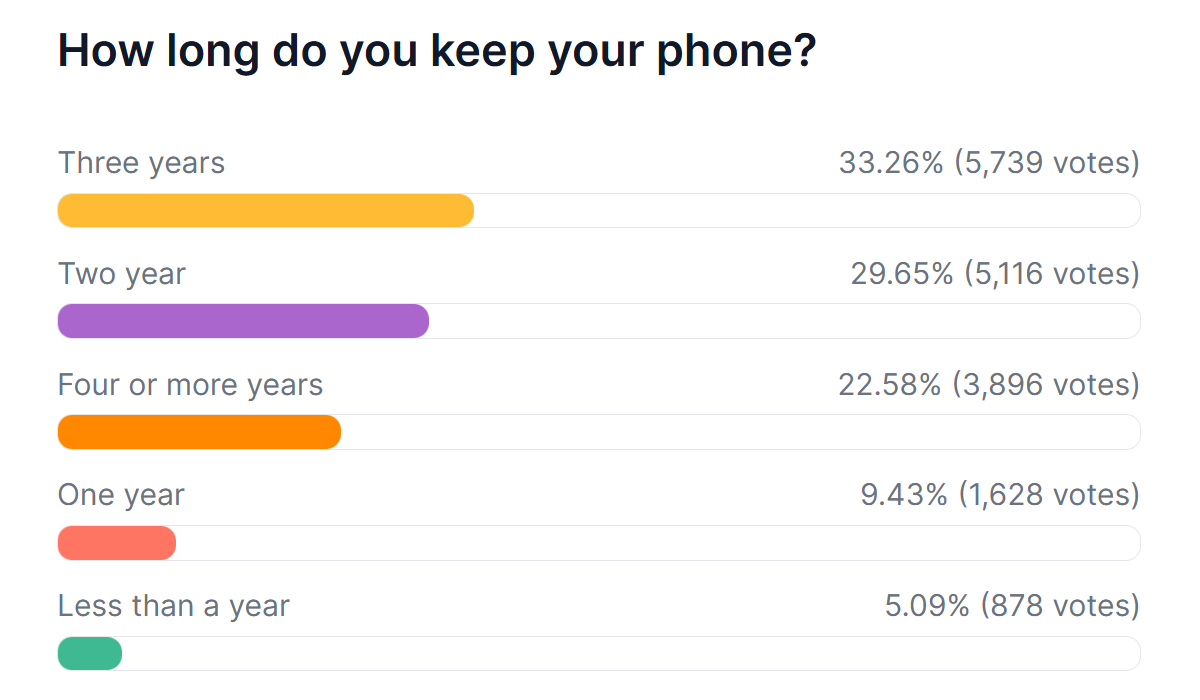
Results from a similar poll in 2020
And that’s a good thing – regions like the EU are pushing manufacturers to support their phones for longer. This includes 5 years of OS updates minimum and having replacement parts available for at least 7 years after end of sales. Soon, the EU Batteries Regulation (set to go into effect in early 2027) will also push for batteries that are easy to replace at home. There is a caveat – water-resistant phones with batteries rated for at least 1,000 charge cycles are exempt, but we’ll see how that shakes out.
Here is a table showing the raw vote counts, if you are curious (shown as vote count and percentage of the vote for that category for each row).
| Replacement period | Flagship | Mid-range | Entry-level |
|---|---|---|---|
| 1 year | 307 (6%) | 214 (5%) | 272 (11%) |
| 2 years | 517 (10%) | 570 (14%) | 533 (22%) |
| 3 years | 954 (18%) | 882 (22%) | 537 (22%) |
| 4 years | 1104 (21%) | 797 (20%) | 317 (13%) |
| 5 years | 1171 (22%) | 734 (19%) | 283 (12%) |
| 6+ years | 1242 (23%) | 738 (19%) | 507 (21%) |
| Total votes | 5,295 (45%) | 3,935 (34%) | 2,449 (21%) |
There are a few other interesting things to notice. First, most of our readers have a flagship (45% of the nearly 12,000 voters). The second most popular category was the mid-range (34%).
As for owners of entry-level phones (21% of everyone who voted), they are the most likely to switch to another phone after just one year – 11% of voters in that category, compared to 5% and 6% in the other two categories. We know that some people buy flagships because they want to be on the cutting edge of tech – this commits them to yearly upgrades – but we didn’t expect to see this in the entry-level category.
Thank you to everyone who participated!