

Getting your audio player ready…
The Roman invasion of Britain in 43 AD brought with it dramatic social upheaval that fundamentally altered the health landscape of the island’s inhabitants. While the Romans claimed to deliver “civilization” to Britannia, a groundbreaking new study reveals that urbanization under Roman rule actually exposed people to novel diseases and created class divisions that severely restricted access to vital resources. The research, published in the journal Antiquity, confirms long-held theories that the population’s health declined sharply under Roman occupation, though this decline was limited almost exclusively to urban centers.
The Independent reports that archaeologists have discovered infant skeletons from the Roman period bearing significant “negative health markers,” pointing to widespread suffering among urban populations. What makes this finding particularly striking is that rural communities showed no such deterioration, suggesting that pre-Roman Iron Age traditions persisted in the countryside while city dwellers endured harsh, long-lasting health consequences that spanned multiple generations.
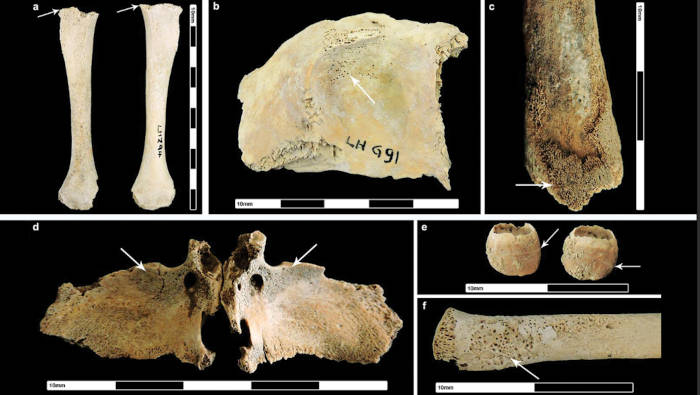
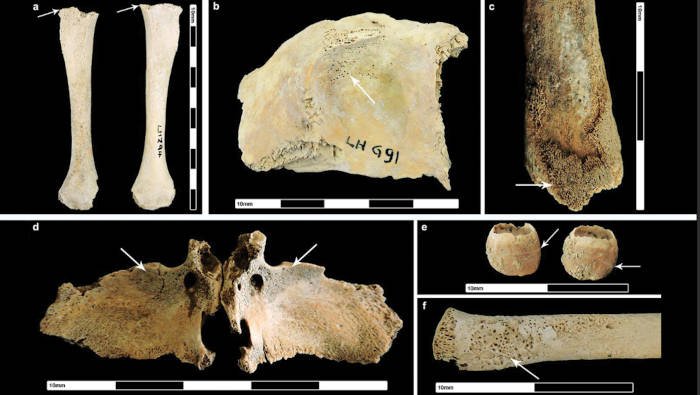
Roman non-adult pathology: a) flattening of humeral heads, suggestive of vitamin D deficiency; b) cribra orbitalia; c) non-specific infection (distal femur); d) new bone on the greater wings of the sphenoid bone, suggestive of vitamin C deficiency; e) dental enamel hypoplasia on deciduous incisors, presenting as a grooved depression; f) lytic foci on the proximal head of a radius, suggestive of tuberculosis. (Pitt/Antiquity Publications Ltd).
Unlocking Iron Age Health Through Infant Remains
Studying health in Iron Age Britain has historically presented significant challenges for archaeologists due to the funerary practices of the period. Unlike the organized cemeteries associated with Roman Britain, Iron Age communities believed that fragmenting the body was necessary to release the soul into the afterlife. This custom meant fewer complete skeletal remains were available for examination, creating gaps in our understanding of pre-Roman health conditions.
Rebecca Pitt from the University of Reading developed an innovative approach to overcome this limitation. Her research, focused on infant skeletons, which were frequently buried intact rather than cremated or disarticulated during the Iron Age.
“Iron Age funerary rites are very different to the organized cemeteries we often associate with the dead,” Pitt explained. “This complicates analysis of this period as there are comparatively fewer human remains available for study, and examination of the complete skeleton cannot always take place.”
By examining 646 skeletons – 372 children and 274 adult females – from urban and rural sites across south and central England, Pitt applied the Developmental Origins of Health and Disease (DOHaD) hypothesis. This framework suggests that experiences in early childhood, particularly before age two, can leave lasting impacts on health throughout an individual’s lifetime and even affect subsequent generations. The research examined health stressors such as disease, malnutrition, and traumatic events that influence epigenetic signatures, creating health issues that cascade through time.
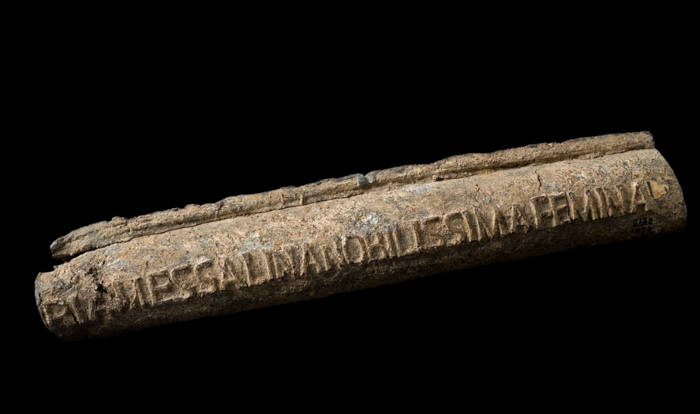
Roman lead water pipe from 20-47 CE. (CC BY 4.0)
Urban Disease Versus Rural Health
The statistical analysis revealed a sharp divergence between urban and rural populations during the Roman period. While urban centers such as civitas capitals showed a significant rise in negative health markers including skeletal lesions and signs of disease, rural skeletons displayed only slightly increased pathogen exposure with no statistically significant difference between Iron Age and Roman health indicators. This urban-rural divide tells a compelling story about the real impact of Roman civilization on British society.
The culprits behind urban health deterioration were manifold. Urbanization resulted in overcrowded living conditions, polluted environments, and critically, widespread exposure to lead, which formed a key component of Roman urban infrastructure. Lead pipes carried water throughout cities, while lead was also used in cooking vessels and even as a sweetener in wine. According to research from the University of Cambridge, intestinal parasites such as whipworm became increasingly common across Europe during the Roman Period, contrary to the assumption that improved sanitation would reduce parasitic infections.
“By looking at mother-infant experiences together, we can observe the long-lasting impact urbanization has on the health of individuals, with negative health signatures passed from mothers to their children,” Pitt noted.
The research demonstrates that these health impacts weren’t isolated to a single generation but created a cycle of declining health that persisted across multiple generations of urban dwellers.
Modern Parallels and Future Implications
The findings from Roman Britain carry urgent implications for modern society. Pitt draws explicit parallels between the health crisis in ancient urban centers and contemporary challenges facing cities worldwide. “Currently, children are being born into an increasingly polluted world, and a growing number of families are struggling with the cost of living,” she warned. “This can severely impact the development of young children, and result in a major impact on their health and well-being, which will last throughout their lifetime and possibly into future generations.”
The research challenges the traditional narrative that Roman occupation uniformly improved living conditions in Britain. While rural communities maintained their traditional practices and health levels, urban populations paid a steep price for the so-called benefits of Roman civilization. The class divides introduced by Roman society created unequal access to resources, with the poorest urban residents bearing the brunt of pollution, disease, and malnutrition.
Interestingly, the preservation of Iron Age traditions in rural areas suggests that Roman cultural influence was less pervasive than previously believed. Rural Britons continued their ancestral ways of life relatively undisturbed, questioning the prevailing assumption that Roman administration forced dramatic cultural change throughout the conquered territories. This pattern of urban suffering and rural continuity offers valuable lessons about the hidden costs of rapid urbanization and the importance of maintaining access to clean environments and adequate resources for all members of society.
The study serves as both a historical revelation and a cautionary tale, demonstrating how urbanization without proper planning and equitable resource distribution can create multigenerational health crises that echo through centuries.
Top image: New bone on the greater wings of the sphenoid bone, suggestive of vitamin C deficiency. Source: Pitt/Antiquity Publications Ltd
By Gary Manners
References
The Independent. 2025. Roman occupation brought new diseases to Britain, archaeologists find. Available at: https://www.independent.co.uk/news/science/archaeology/roman-occupation-britain-health-map-b2882303.html
Pitt, R. 2025. Assessing the impact of Roman occupation on England through the Developmental Origins of Health and Disease (DOHaD) hypothesis. Antiquity. Available at: https://www.cambridge.org/core/journals/antiquity/article/assessing-the-impact-of-roman-occupation-on-england-through-the-developmental-origins-of-health-and-disease-dohad-hypothesis/921B8AB243C77B712498B9D56693EB72
Phys.org. 2025. Roman urbanism was bad for health, new study confirms. Available at: https://phys.org/news/2025-12-roman-urbanism-bad-health.html
University of Cambridge. 2016. Roman toilets gave no clear health benefit, and Romanisation actually spread parasites. Available at: https://www.cam.ac.uk/research/news/roman-toilets-gave-no-clear-health-benefit-and-romanisation-actually-spread-parasites