
Getting your audio player ready…
Throughout history, precious gemstones have gone beyond decoration, serving as powerful symbols of wealth, authority, and divine blessing. Ancient civilizations across the globe attributed mystical properties and deep significance to these rare and beautiful stones. They used them to display social status, form political alliances, and strengthen connections to the spiritual realm.
From the glittering crowns of pharaohs to the sacred amulets of priests, gemstones communicated messages of authority that needed no translation. Their captivating combination of rarity, durability, and striking beauty made them ideal repositories of value and meaning in societies.
Understanding the historical significance of these ancient gems reveals the aesthetic preferences of past cultures, along with their values and power structures. These historical insights continue to shape how we perceive precious stones today.

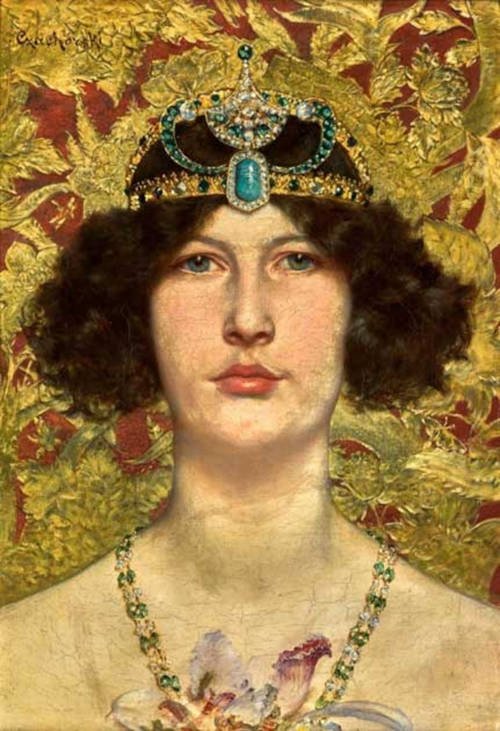
Cleopatra depicted wearing an emerald, by Władysław Czachórski. (Public domain)
Emeralds: The Green Fire of Egyptian Royalty
Emeralds were treasured in ancient Egypt, where they symbolized rebirth, fertility, and divine protection. famously adored them, even claiming the nation’s emerald mines as her own. She wore the vivid green Cleopatra stones to emphasize her royal power and connection to the goddess Isis.
Egyptians believed emeralds promoted healing and eternal youth, so the gems were often buried with the dead for safe passage into the afterlife. Their rich color and rarity made them valuable trade items across the ancient world.
Emeralds have continued their royal legacy through the centuries. According to Town & Country, they have dazzled in crowns, tiaras, and necklaces, including Queen Elizabeth’s brooches and Princess Diana’s iconic choker. The famed Cambridge Emeralds, won in a 19th-century raffle, remain some of the most storied jewels in the British royal collection, still worn at major state events today.
Rubies: The King of Gems in Asian Empires
Ancient Asian cultures, especially in Burma, India, and Siam, revered rubies as “ratnaraj,” or the king of precious stones. The deep red symbolized life force and royal authority.
Burmese warriors even believed rubies inserted beneath the skin granted invincibility in battle. Indian maharajas used vast collections of rubies as tangible demonstrations of political power, while Mughal emperors created magnificent, history-defining ruby jewelry.
The market for these gems remains strong. According to Forbes, a 10.33-carat untreated Burmese ruby recently sold for an impressive $5.5 million at a Sotheby’s auction, more than doubling its high estimate. This intense collector demand reflects the enduring value of these stones.
Rubies’ trade routes from Southeast Asia were crucial economic corridors, underscoring their historical role as both sacred symbols and powerful economic assets
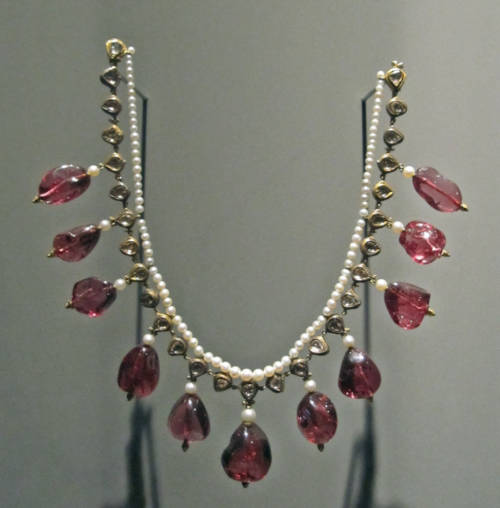
Ruby necklace, India, 1607-1619. (Sodabottle/CC BY-SA 3.0)
Sapphire Stone: The Coveted Gem According to Leibish
Sapphires, one of the four precious gemstones, held immense spiritual and political importance across ancient civilizations.
Leibish notes that diamonds, emeralds, rubies, and sapphires were considered the most lavish gemstones on the planet. They were prized far above all “semi-precious” stones.
Ancient Persians believed the sky was blue because it reflected a massive sapphire beneath the Earth, giving the stone cosmic symbolism. Kings, priests, and rulers wore sapphires to signal wisdom, virtue, and divine favor.
In Greece and Rome, sapphires were linked to Apollo and used by oracle seekers who believed the stones sharpened intuition and guarded against deceit. Medieval monarchs continued this legacy, embedding sapphires into crown jewels to express moral authority and the right to rule. Their durability also made them ideal for signet rings, securing their place as powerful symbols of identity, governance, and sacred law.
Jade: The Imperial Stone of the Chinese Dynasty
Jade held unmatched importance in ancient China, symbolizing virtue, purity, and immortality. Revered for thousands of years, it was valued above gold and associated with moral excellence.
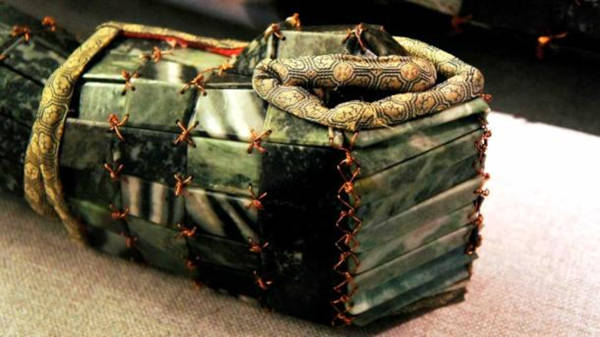
Detail of the hand section of the jade burial suit of Liu Sui, Prince of Liang, of Western Han (Zcm11 / CC by SA 3.0). In Han Dynasty China, elaborate ceremonial suits were created with polished pieces of jade, which were used for royal burials.
Confucius praised jade’s luster as kindness, its clarity as honesty, and its strength as wisdom. Chinese emperors were even buried in jade suits stitched with gold, believing the stone could preserve the body for eternal life.
Its rarity shaped entire trade networks, with prized “mutton-fat” white and imperial green varieties reserved strictly for royalty. Jade’s toughness required master artisans months or years to carve ceremonial vessels and intricate sculptures, further elevating its prestige.
Beyond China, jade’s ancient significance is evident globally. Archaeologists recently uncovered a valuable jade stone, a gold brooch, and a bronze pin from around 2500 BC in Troy. This remarkable find is considered one of the site’s most important discoveries in a century.
Diamonds: The Invincible Jewels of Ancient India
Ancient India was the first civilization to recognize the diamond’s extraordinary power, naming it “vajra,” meaning thunderbolt and indestructible. Mined primarily in the Golconda region, Hindu texts claimed these stones ensured victory for royalty, who valued them as symbols of supreme, invincible power.
Though ancient technology couldn’t unlock their full brilliance, these stones traveled trade routes to Rome and eventually marked the rise and fall of empires.
The legacy of these ancient Indian mines continues to intrigue. Famous diamonds like the Koh-i-Noor originated here, their ownership signifying the transfer of immense power.
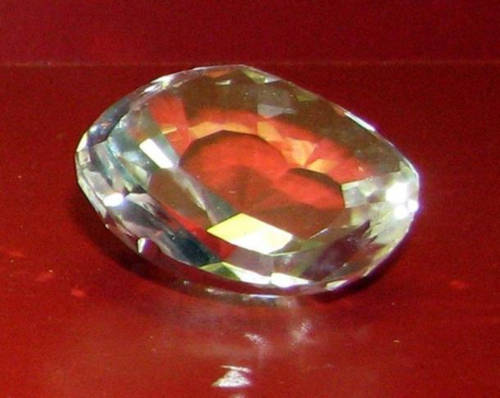
Glass replica of the Koh-i-Noor Diamond in its original form. (From the Reich der Kristalle museum in Munich.) ( Chris 73 / Wikimedia Commons CC BY-SA 3.0)
This legacy is set to unfold further: a 117-year-old vault in Bangladesh’s Sonali Bank is soon to be unlocked, believed to contain the fabled 182-carat pale pink diamond. Often called the sister of the Koh-i-Noor, this diamond was last sighted in 1908, demonstrating the enduring symbolic weight of these historic jewels.
Pearls: The Tears of Gods Across Civilizations
Pearls held a unique status as the only gems requiring no cutting to reveal their pristine beauty, symbolizing purity and divine favor from China to Rome. Chinese legends claimed they were dragon tears, while Greek myths connected them to Aphrodite’s joy. Roman society used elaborate pearl jewelry to signify the wearer’s wealth and status. Cleopatra famously dissolved a pearl to display her dominion over wealth.
The Persian Gulf was the legendary source. In 2017, the world’s oldest known pearl, dating back 8,000 years, was found off Abu Dhabi, confirming Neolithic-era trading.
Recently, archaeologists discovered the region’s first known year-round pearling settlement in the Umm Al Quwain emirate. This “discovery of major significance” confirms ancient literature and solidifies the Gulf’s role as the historical heart of pearl commerce.
Top image: Collection of ancient jewelry with gemstones, representing power and wealth across civilizations. Source: Pexels
References
Forbes. 2024. 10-Carat Ruby Ring Fetches $5.5 Million At Sotheby’s New York Auction. Available at: https://www.forbes.com/sites/anthonydemarco/2024/12/12/10-carat-ruby-ring-fetches-55-million-at-sothebys-new-york-auction/
Leibish. 2024. What is a Sapphire? – Gemstone Facts And Information. Available at: https://www.leibish.com/
Town & Country. 2024. 30 Photos of the Royals Glittering in Emeralds. Available at: https://www.townandcountrymag.com/style/jewelry-and-watches/g68998722/princess-diana-queen-elizabeth-kate-middleton-emerald-jewelry-photos/