
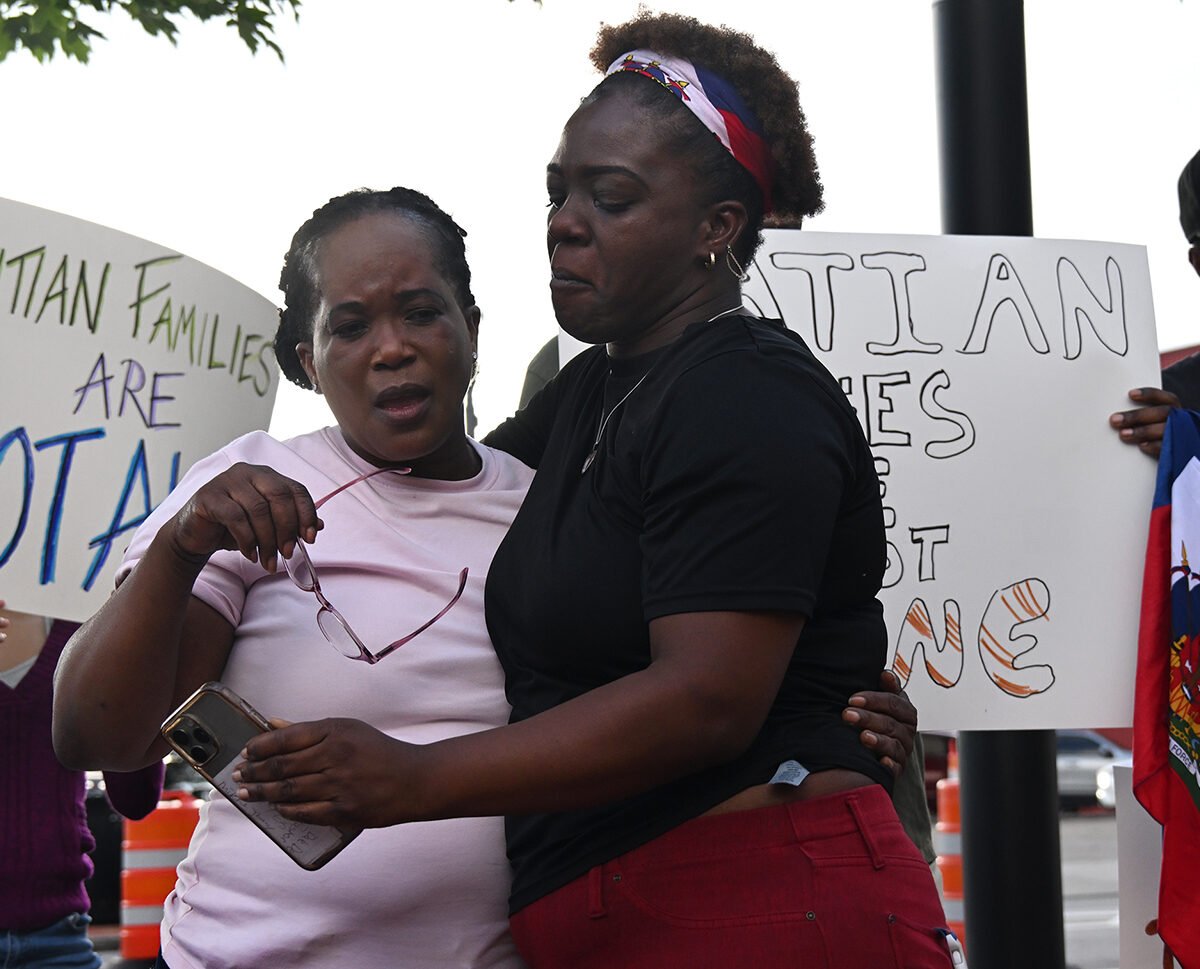
SPRINGFIELD, Ohio (RNS) — On Friday evening (Aug. 14), Philomene Philostin, a local youth pastor, business owner and nonprofit leader, stood on the street corner outside Springfield, Ohio’s City Hall, crying out in Haitian Creole. Pastor Fontil Daity, a Haitian immigrant who leads a local Pentecostal Haitian church, interpreted in English: “Haitians! Haitians! … We cannot take it anymore. We ask for God in heaven to hear our cries!”
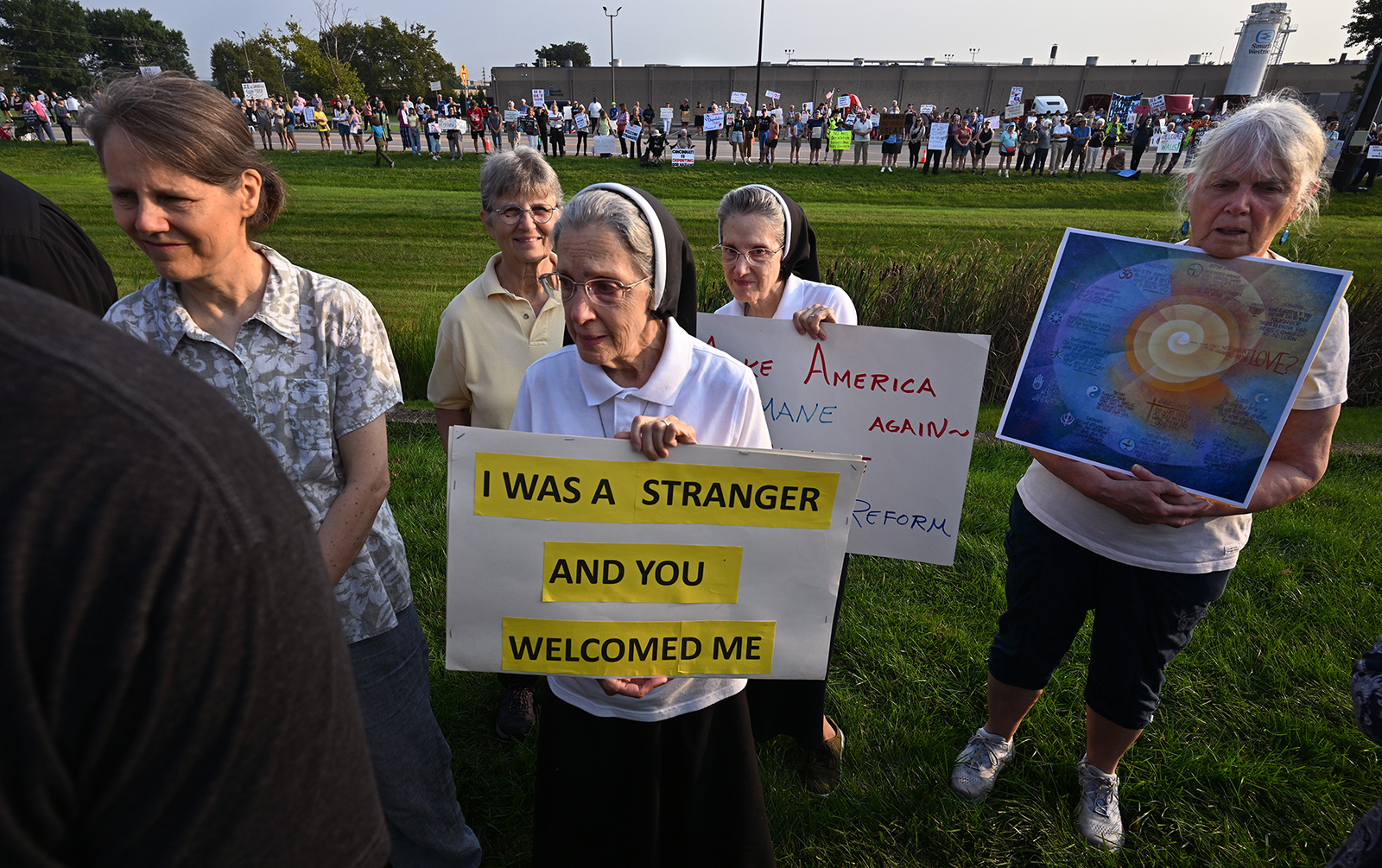
About 75 people gathered around them in the sweltering heat, many holding signs that read, “Love your neighbor” — a reference to the biblical command to love one’s neighbor as oneself. Philostin told RNS she initiated the gathering in response to a new flurry of ICE raids in the city starting the day before. The peaceful protest wove together prayers and testimonies from community members, lawyers and faith leaders. Daity, singing in Haitian Creole, then in English, led attendees in the hymn “Precious Lord Take My Hand.”
For many of the more than 10,000 Haitians in the city of about 58,000, their faith in God — and the support of local immigrants’ rights organizers and faith leaders — is what’s sustaining them as they reckon with the end of Temporary Protected Status. Many of Springfield’s Haitians attend evangelical, Catholic, mainline and Pentecostal churches across the city. And in the months of dread and uncertainty before a federal judge cleared the way on Aug. 4 for the termination of Haiti’s TPS protections, faith leaders and congregations from within and beyond the Haitian community have emerged as pivotal actors in the support networks for affected families. Now, those networks are adapting in real time to respond to what they see as a human-engineered spiritual, moral and humanitarian crisis, especially as ICE activity stepped up over the weekend. A DHS spokesperson said they would not disclose details of its operations.
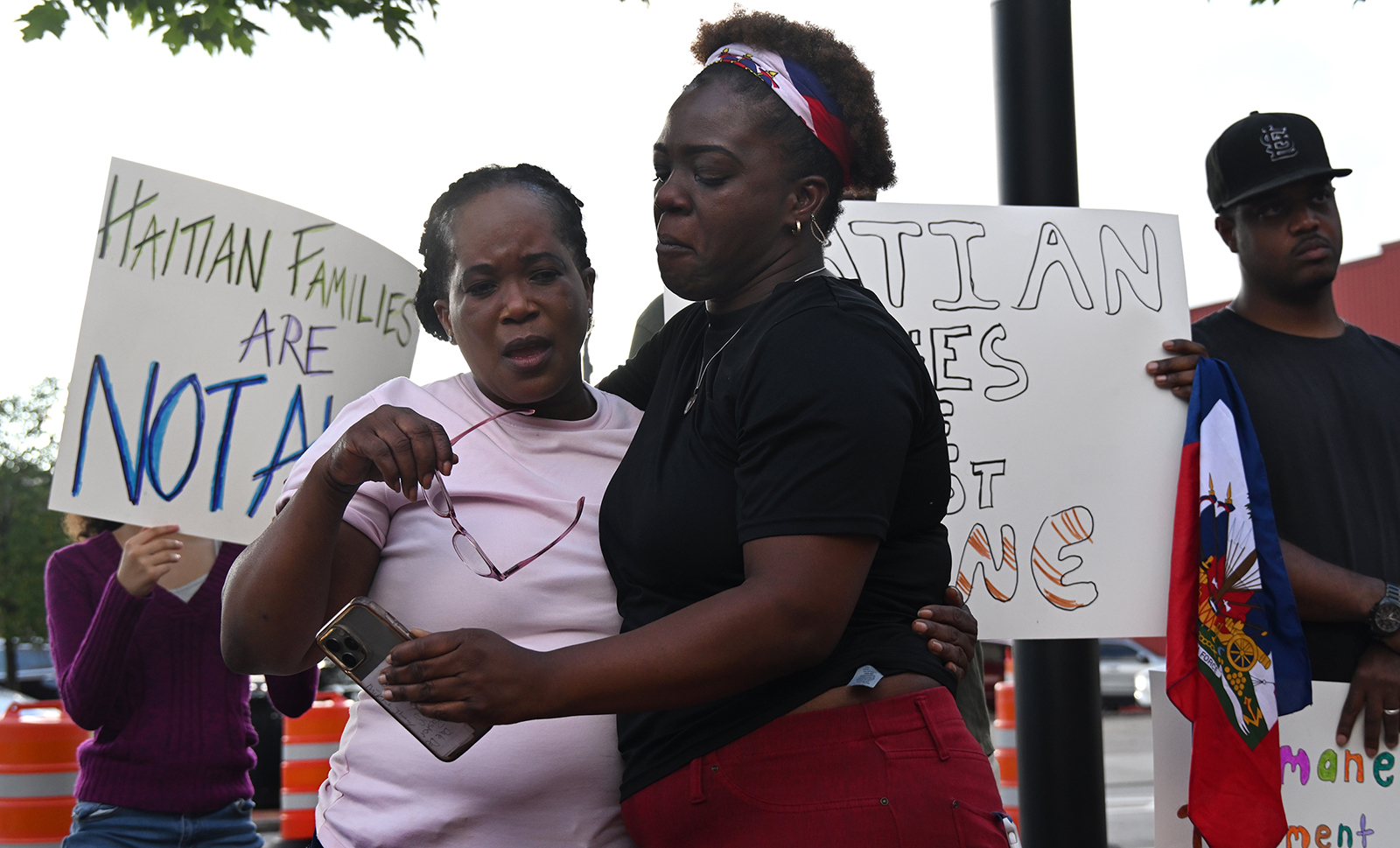
That crisis had a face early Friday morning. Charles Beaubrun Ardouin, a Haitian immigrant and Springfield resident who spoke at the protest Friday evening, was driving through the city dropping at least five other Haitian men off after their nightshift at a local automobile factory when he was stopped by several ICE vehicles, he told RNS.
Ardouin, a U.S. citizen, said about 10 agents — most wearing masks — demanded identification for everyone in the vehicle. After detaining the other men, ICE agents reportedly told Ardouin they would be taken to Butler County Jail in Hamilton, Ohio. Ardouin said all the men have pending asylum cases.
“These people are coming to the United States of America for freedom. They’re coming for work. All they want is due process,” Ardouin told RNS. “The first time I came to the United States of America, I felt freedom. But now, I (feel) fear.”
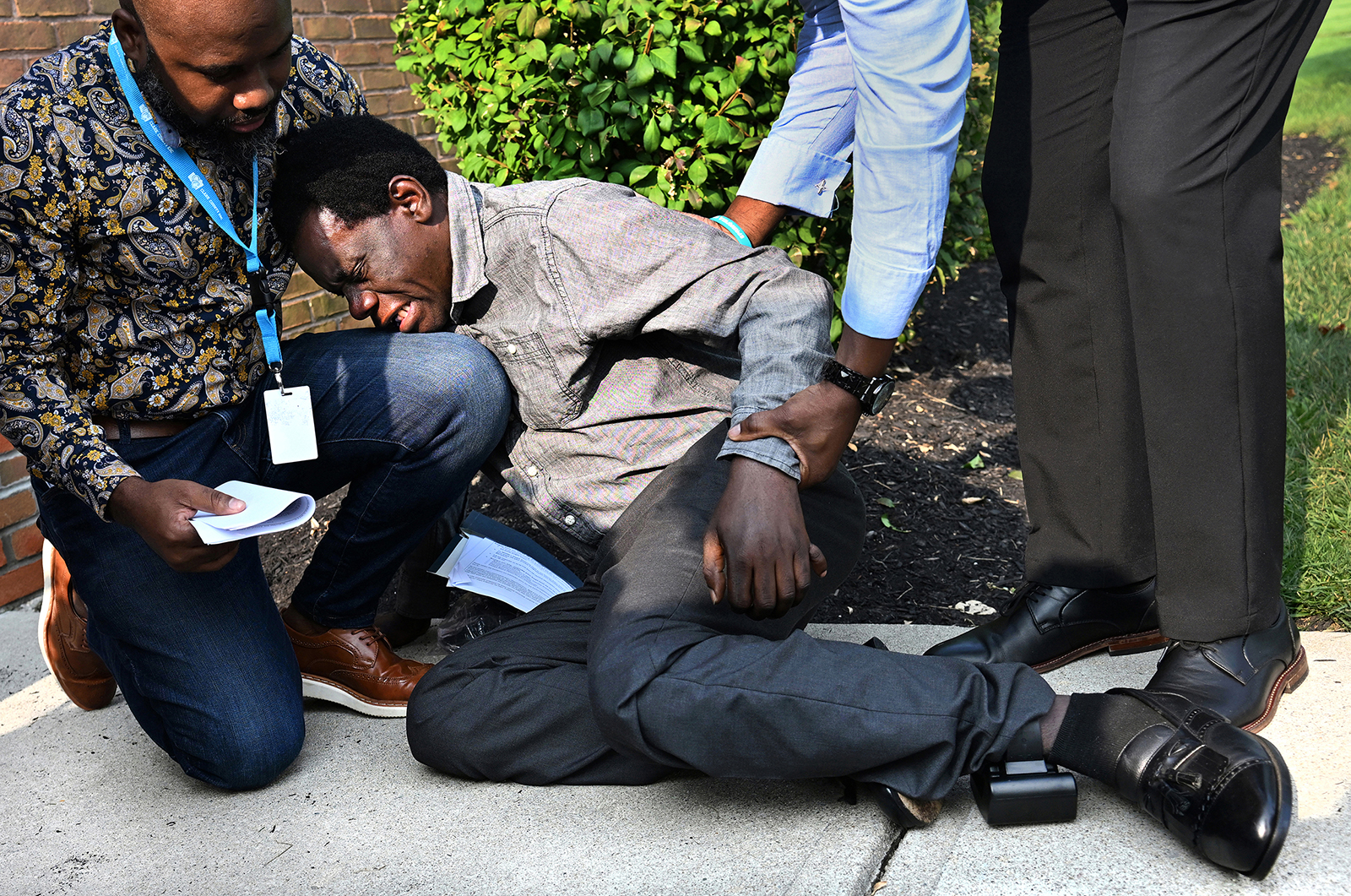
Pro-immigrant faith leaders had long been bracing for a Minneapolis-style ICE crackdown against the Haitian community in Springfield. Instead, ICE has shifted tactics: Beginning just over a week after the termination of TPS for the country’s 330,000 Haitian recipients became enforceable on Aug. 5, ICE has conducted several rapid, small-scale ICE detentions. And since late July, ICE has sent many Haitian residents in Springfield letters ordering them to report to the Blue Ash ICE office over an hour away, near Cincinnati. There, many former TPS holders, all of whom came to the U.S. legally seeking safety from disastrous conditions in Haiti, have reported being given the choice between self-deporting with $2,600, or being released with ankle monitors — which many in Springfield referred to as “shackles” — and a restriction to limit travel to within a 75-mile radius of their address.
Without work permits, the Haitian residents are struggling to pay for rent and groceries. Some are hiding in their homes, too afraid of ICE to shop at local businesses or attend church. Others have had their drivers’ licenses expire or become nonrenewable. Parents are filling out legal paperwork to give power of attorney to neighbors and friends in case they get separated from their children, especially those born in the U.S. who have legal citizenship. This weekend, local Haitian leaders shared reports that one, possibly two, Haitian immigrants had committed suicide. RNS was unable to independently verify those claims.
“Jesus says, ‘Come unto me, all you who are weary and heavy laden, and I will give you rest.’ And all that we can do is to go to Him right now, because we don’t have any other choice,” faith leader and executive director of the Haitian Supporter Center, Viles Dorsainvil, told RNS.
On Friday afternoon, hours after the ICE raid Ardouin witnessed, staff and volunteers met with clients at the support center located in a Church of the Nazarene church. Beneath papered-over windows, boxes of diapers and food donations — Cheerios, black beans, ramen noodles — crowded one corner of the main room. In a three-hour span, nearly a dozen Haitians stopped in seeking help. One woman asked what her next steps should be after her cousin was detained. Several people arrived with ankle monitors, looking for legal assistance with next steps.
As desperate as the situation has become in Springfield, Haitian community members do not want to return to Haiti. “They choose the ankle shackles because the whole world, they know going back to Haiti is being placed in a death sentence,” said the support center’s administrative assistant, James Pepitho Fleurijean. Armed gangs control most of Port-au-Prince and are expanding their reach into neighboring regions. Gang violence in Haiti has resulted in over 2,000 deaths in this year alone. “There are so many people that went back to Haiti, and when they get there, and you know the rest of the story: People have been kidnapped, people have been killed, young ladies have been raped,” Fleurijean said.
They choose the ankle shackles because the whole world, they know going back to Haiti is being placed in a death sentence.
James Pepitho Fleurijean, of the Haitian Support Center
In his office, Dorsainvil, a former TPS holder who moved to the U.S. from Haiti in 2020, sat at his desk answering a stream of phone calls and messages. He described living in Springfield as being in an “open jail” where every moment is tainted by “psychological fear.”
“Here we live one day at a time,” said Dorsainvil, also an elder at Central Christian Church and a pastor who served in Haiti and Jamaica. “We just can’t predict what tomorrow will look like. So the day we see is … the day we live, and going to bed, asking God to protect us, to guide us and give us wisdom.”
Among pro-immigrant organizers, faith leaders and volunteers, active Signal and WhatsApp chats have become part of the new normal as they respond to evolving ICE tactics. Springfield Neighbors United, a local nonprofit that, though not faith-based, is run by volunteers with many religious beliefs, has coordinated food and diaper drives, hygiene bags and rides for Haitians going to immigration court. They’ve teamed up with St. Vincent de Paul, a Catholic nonprofit, to fill out passports for newborns and children who are U.S. citizens. The groups are also helping Haitians assign power of attorney to U.S. citizens in case they are separated from their children. Now, they’re starting a program to support families left behind after a loved one is detained.
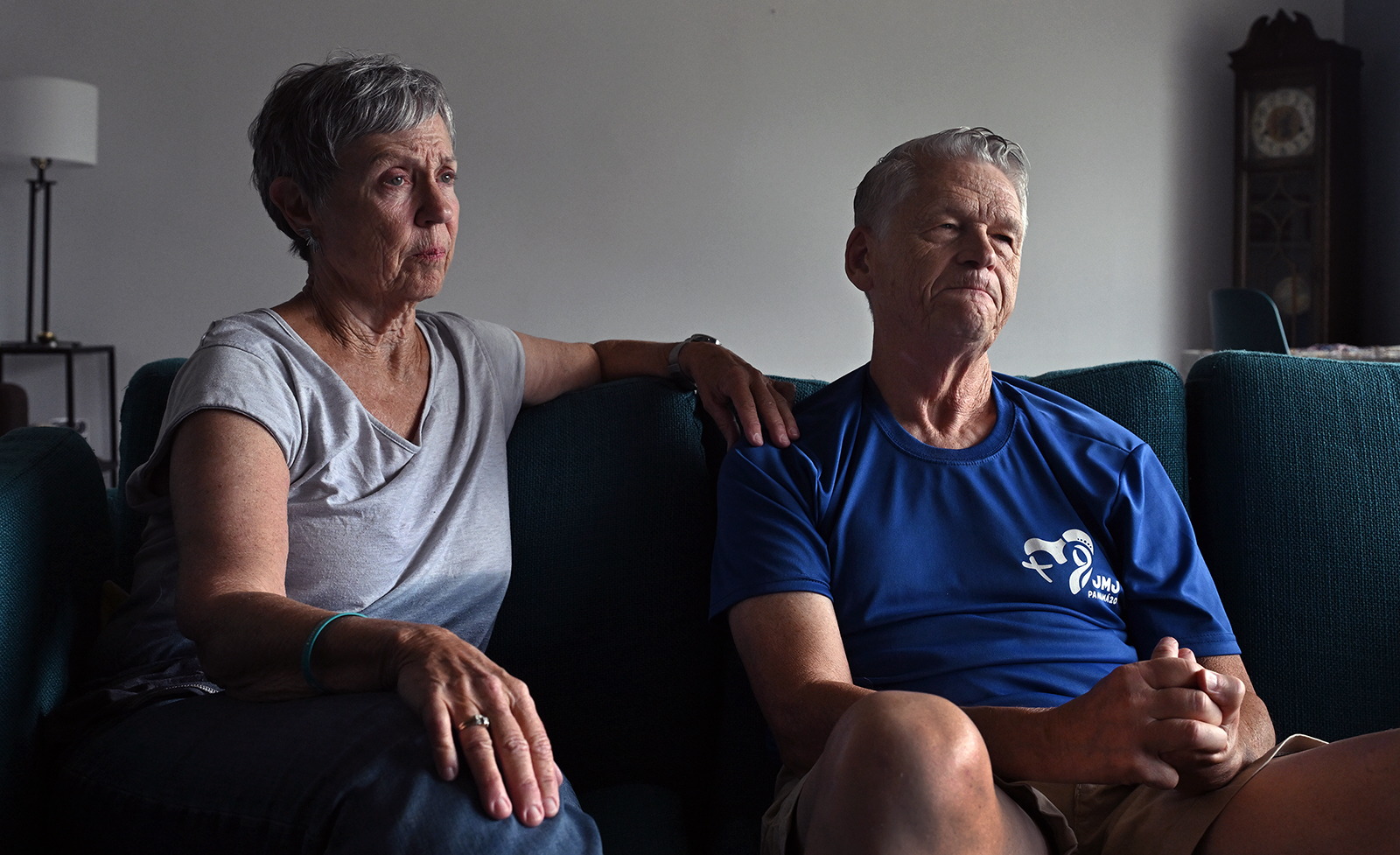
“I think spiritually and morally, I mean, we have to respond,” said Norm Horstman, who, along with his wife, Lou Ann, is a retired cradle Catholic “in exile” from the church over its stance on LGBTQ+ issues. The couple has been heavily involved with Springfield Neighbors United since 2024. “We don’t have a choice.”
Spiritually and morally, I mean, we have to respond.
Norm Horstman, Springfield resident
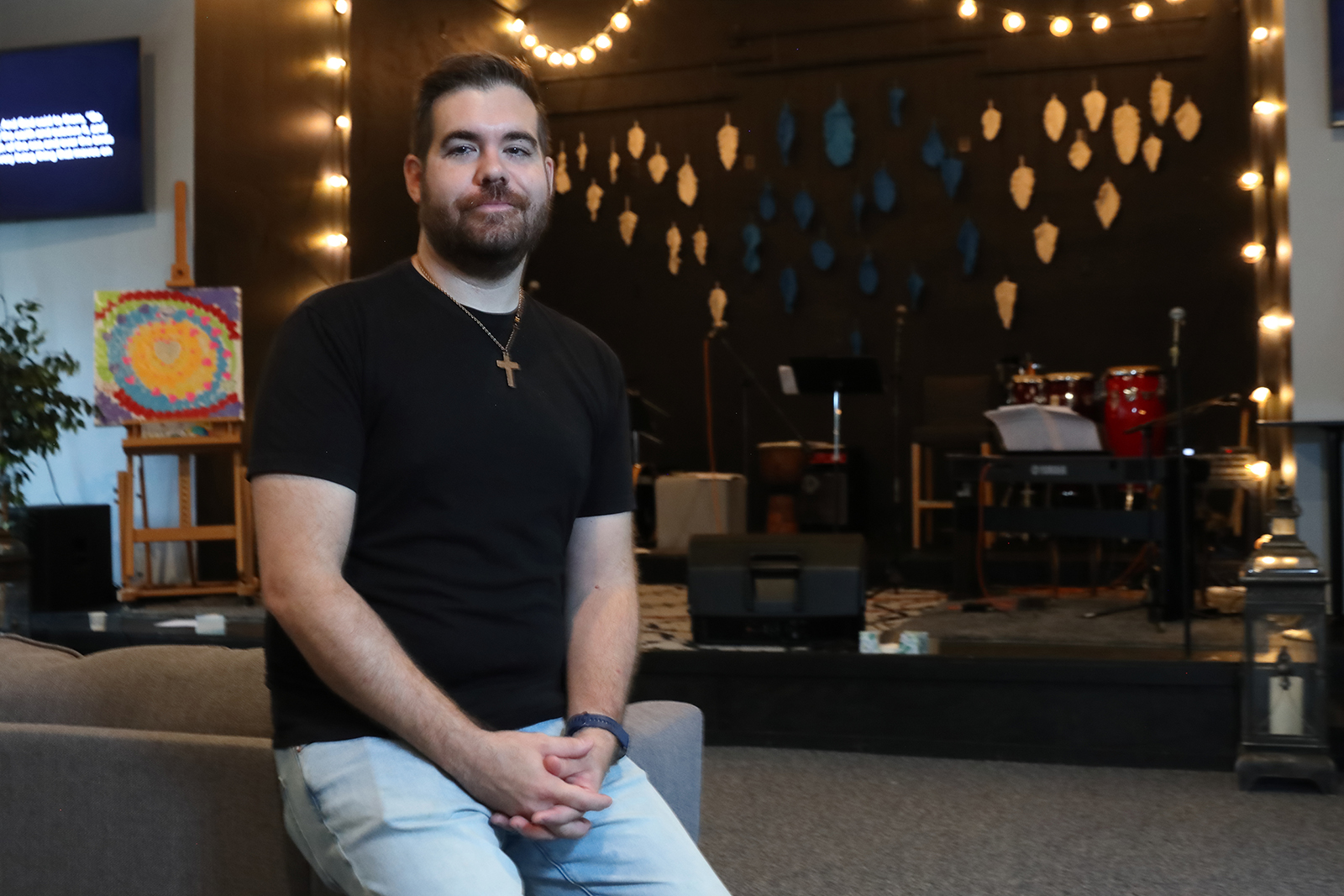
Potential family separation is a major concern. The over 1,200 U.S.-born Haitian children and infants under age 4 could be separated from detained parents. Earlier this year, the Ohio government awarded the local child welfare department and a Christian nonprofit, the Nehemiah Foundation, a grant to form a respite care network. Tim Voltz, an elder at a multicultural neighborhood church called Champion City that’s roughly 30% Haitian, was tapped by the Nehemiah Foundation to recruit families from local churches. Voltz estimated that about 20 vetted families had been equipped to provide short-term childcare until kids could be reunited with family.
“If you have either the possibility of being separated from your children or taking your children back to a country that they’ve never been to, that is violent … I don’t know how you make that choice,” said Voltz.
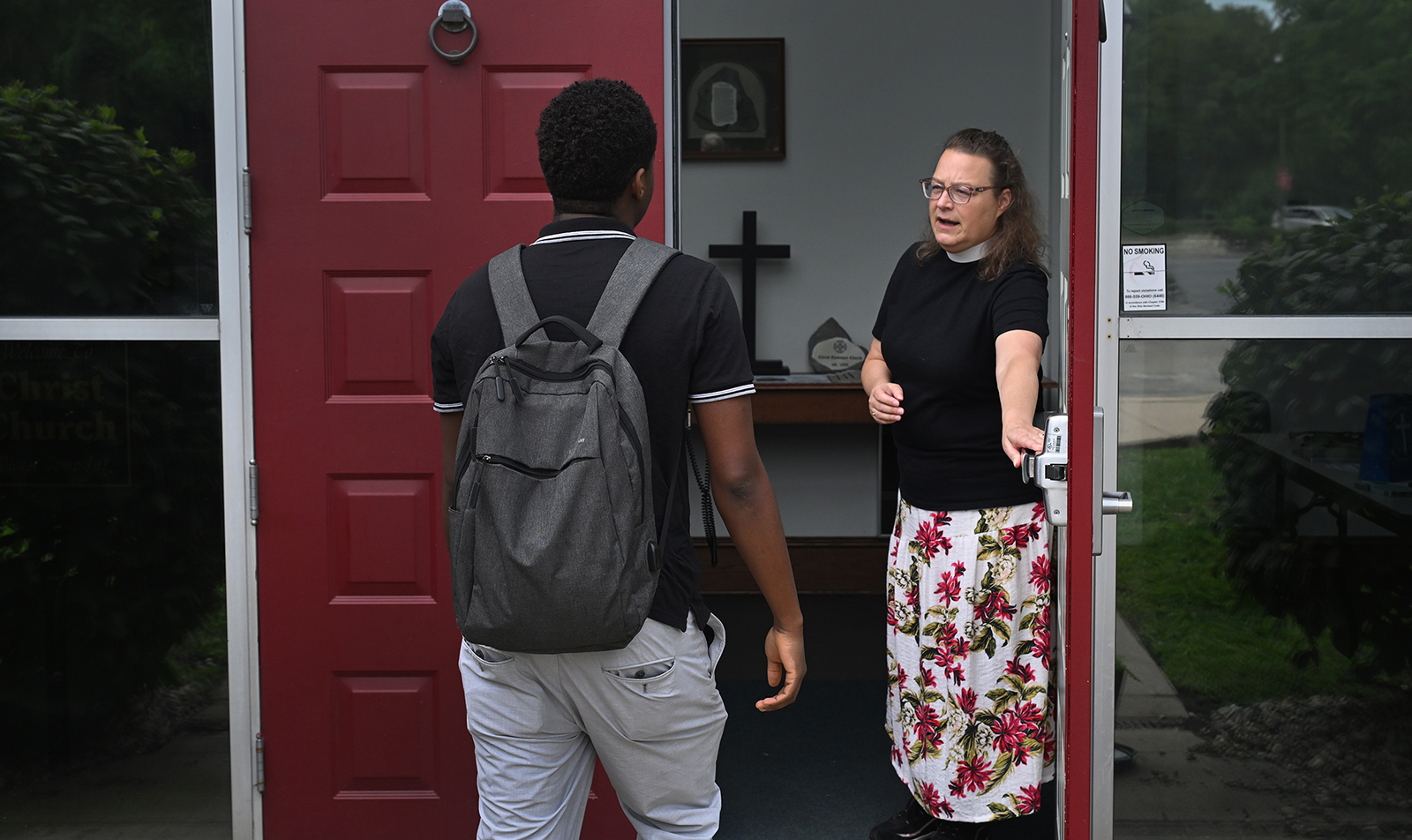
Faith leaders are also responding to the new reality of having parishioners outfitted with ankle monitors. On Saturday, the Rev. Michelle Boomgaard, rector at Christ Episcopal Church, met with one such parishioner to discuss next steps.
“I can’t say I’m fine,” the parishioner said, standing in the church vestibule after greeting Boomgaard. “It’s impossible to be fine.”
I can’t say I’m fine. It’s impossible to be fine.
Haitian parishioner outfitted with an ankle monitor by DHS
When Boomgaard asked if his employer knew what was going on, the parishioner, whose job involves one-on-one patient care, said while his employer understood, the patients he cares for might not.
“Coming with an ankle monitor means … being a criminal. I don’t think anybody will be happy to be in a room at a hospital and have a criminal taking care of you,” he said.
Many volunteers told RNS they are disturbed by the level of hatred aimed at the Haitians as well as those who try to aid them. Several faith leaders said they have had bomb threats at their churches and nonprofit centers. Recent social media videos depicting the Haitians’ suffering are often flooded with vitriolic and racist comments.
Springfield’s Haitian population first made headlines during the 2024 presidential election, when Donald Trump and JD Vance spread falsehoods about migrants eating pets. That year, neo-Nazi and white supremacist groups descended on Springfield, distributing racist flyers and staging protests at City Hall and in front of the mayor’s home. In an ongoing lawsuit, the city of Springfield says the leader of the neo-Nazi group Blood Tribe took credit on social media for initially spreading those debunked claims about Haitian migrants.
“I’ve never quite understood how any human being can look at the suffering of another human being and say, ‘Let’s add to that,’” reflected Boomgaard.
Often, supporting Springfield Haitians is an exercise in being an antidote to the hate — and recognizing people’s humanity. Carl Ruby, pastor of Central Christian Church and founder of the faith-based pro-immigrant coalition G92, served communion at Blue Ash last week to Haitians going in to receive ankle monitors as a reminder that they are part of the body of Christ.
Roughly 40 Haitians have joined his church in the last year, he told RNS, thanks to the church’s reputation for aiding that community. G92, which Central Christian is part of, has hosted rapid response trainings, coordinated press conferences and organized churches willing to offer sanctuary to Haitian members. Ruby told RNS he is haunted by what could await his congregants if they are forced back to Haiti.
“For me, that’s not just a hypothetical,” he said, referring to the sexual violence in Haiti. “I put faces with that. I think of children who I baptized, and who have been members of my church, who could be put into that situation.”
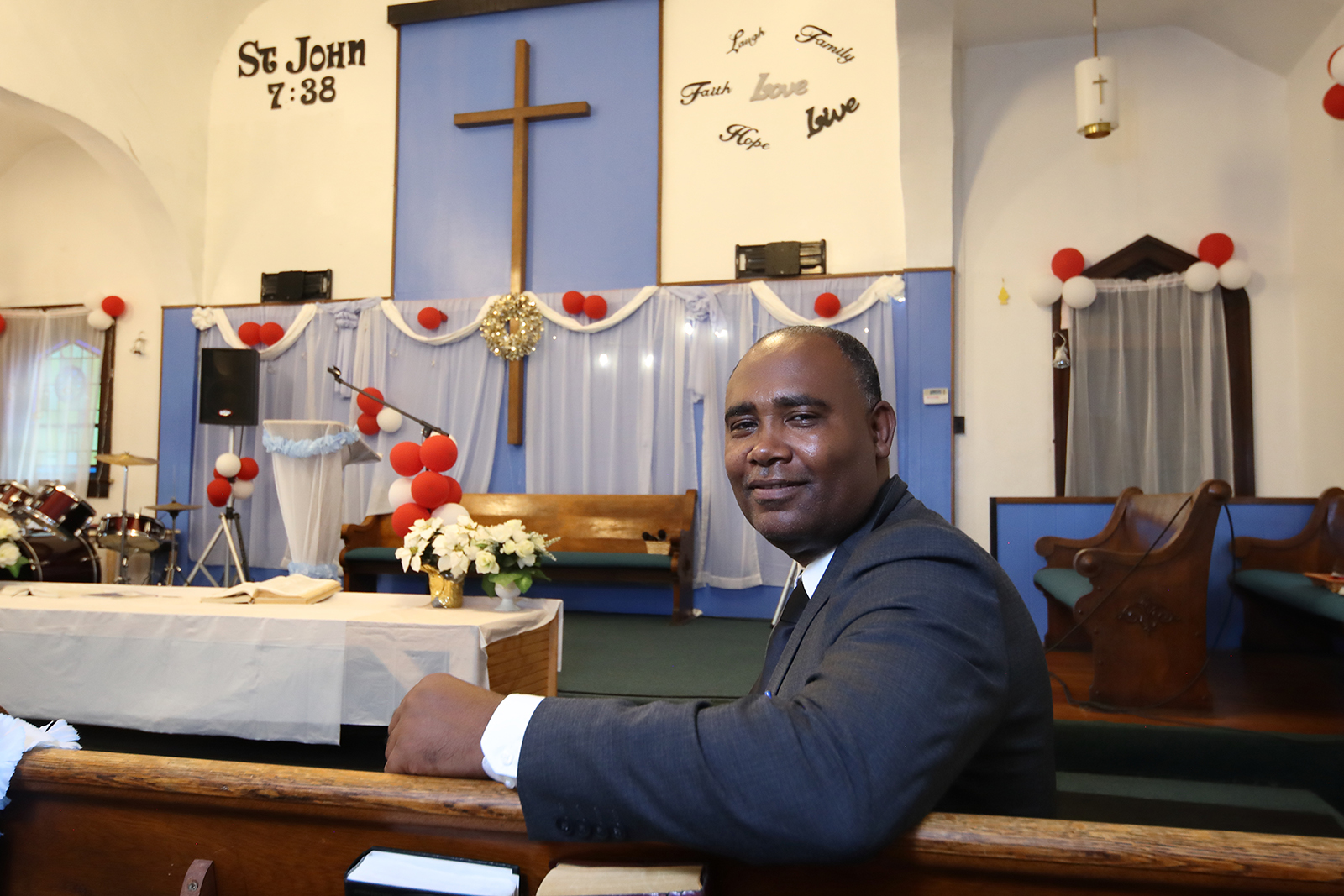
Some churches that had flourished, thanks to Haitians, are now shrinking amid safety concerns. On Sunday morning, Daity met with RNS in his empty church. Eighty people had once filled the pews on Sunday mornings, he told RNS. That morning, one parishioner had come, but Daity sent the person home when he got a call notifying him that ICE was in the neighborhood after reportedly detaining Haitians at a nearby Walmart.
“Sunday used to be a sacred day in America, but here we are,” he said, wearing a charcoal suit in the stained glass-windowed sanctuary. “Now we’re arresting people, chasing people on Sunday like a runaway slave.”
Sunday used to be a sacred day in America … Now we’re arresting people, chasing people on Sunday like a runaway slave.
Pastor Fontil Daity
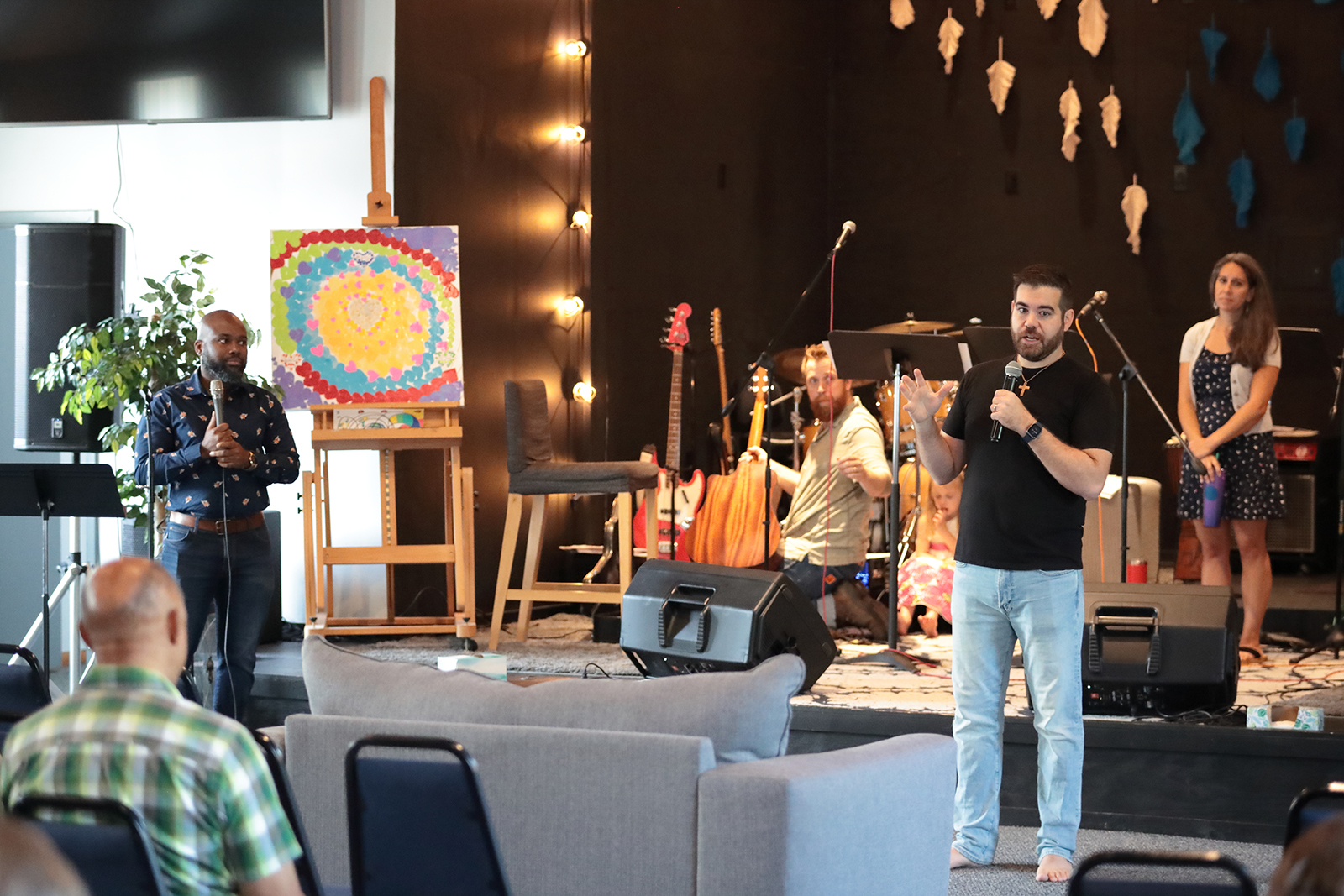
That morning, volunteers and organizers, many connected with local faith groups, patrolled Springfield’s streets, photographing ICE vehicles. Meanwhile, worship at Voltz’ church, Champion City, seemed to carry an added weight. After the worship set in the small sanctuary ended, the congregation erupted in a spontaneous rendition of the song “10,000 Reasons.”
At a microphone near the front, the church’s Haitian Creole interpreter led the congregation in singing the first verse: “Whatever may pass and whatever lies before me,” he sang, “let me be singing when the evening comes.”