
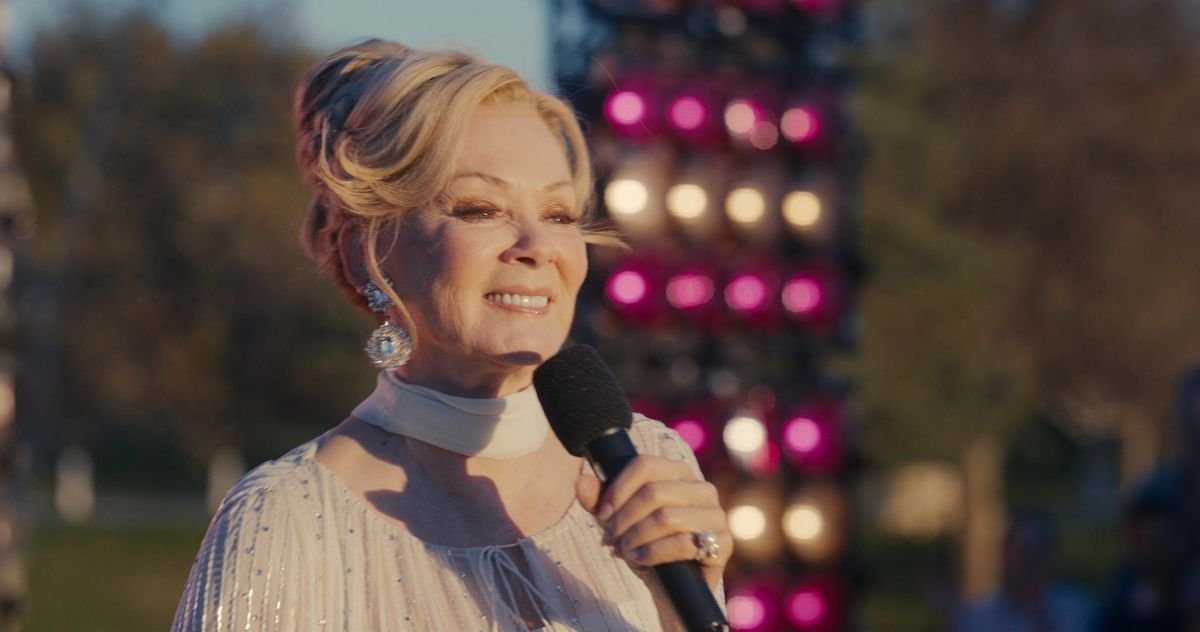
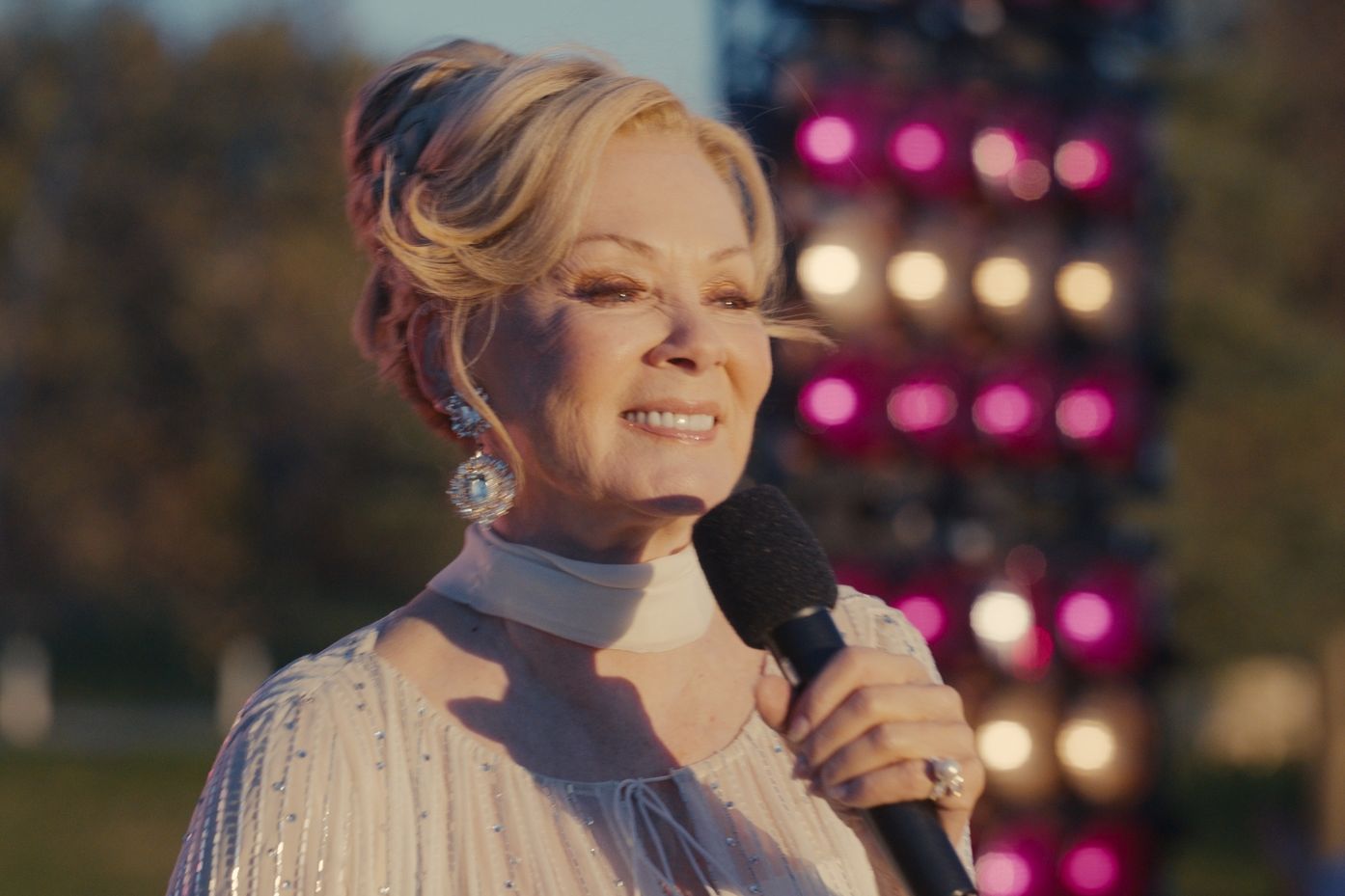
Over the course of its run, Hacks increasingly played like an elegy: a lament for an ecosystem of fame, comedy, and celebrity that is either already dead or, like Deborah herself, terminally ill.
Photo: Courtesy of HBO Max
Spoilers ahead for the series finale of Hacks.
They should have killed her. That was my knee-jerk thought at the end of Hacks, as the camera pulled away from Jean Smart and Hannah Einbinder walking down the Vegas strip in the final seconds of the series finale. Up to that point, the episode unfolds as a prolonged farewell to Deborah, framed as the diva savoring her last days on Earth, and the effect is lovely: Each detail, whether she’s strolling along a bridge or enjoying Parisian bread, carries the ache of impending loss building toward a devastating, bittersweet inevitability. And then, quite predictably, Hacks swerves away from that pain at the last second.
In the leadup to that last moment, Deborah reveals to Ava, now embarked on the television career she’s always wanted, that the procedure to remove the mass Deborah concealed in “Montecito” failed, and that she has chosen to forgo treatment so she may exit on her own terms. Ava oscillates between acceptance and denial, struggling to reconcile herself to losing the mentor and friend she has come to love. Together, they take one final trip: a vacation in Paris, followed by a train ride to an assisted-suicide clinic in Switzerland.
As a premise for the series closer, it’s excellent. For five seasons, Hacks charted Deborah’s fight to engineer a late-career reinvention, and the idea that it all still ends in death evokes a genuinely stirring question: What was the meaning of all that struggle? Aside from concluding Jimmy and Kayla’s subplot, which has always felt imported from a broader, sillier sitcom, the finale narrows its focus to the relationship that sits at the heart of Hacks, one built around a push and pull between Deborah’s fierce self-determination and Ava’s desire to pry her open. Ava rejects Deborah’s wishes to end her own life with dignity, tries to accept them, rejects them again, and finally reaches reconciliation. There was never any chance she wouldn’t accompany Deborah to the end. So the two spend a warm, wistful stretch in Paris, wandering museums and savoring each other’s company. Waiting for the train to Switzerland, they slip once again into a volley of banter, workshopping punchlines for a joke about the worst part of being dead. When Ava runs off to the bathroom, Deborah instinctively reaches for her notebook and jots down another idea. Then she stops, seeming to question the point of saving material for a future she has already decided to surrender.
Here comes the swerve: Just as the finale seems to build towards an earned conclusion, it pulls away from pain into something more reassuring. Deborah decides to pursue treatment after all, if only to buy enough time to work a little more. When she tells Ava, “I may not have 30 years, but I think I have another hour,” I couldn’t help being annoyed at the choice, which felt like a refusal to fully commit to the devastating emotional logic that the finale placed on offer.
Then again, what was I expecting? This is typical of Hacks, a series that constantly positions itself to do something emotionally dangerous before recoiling toward a safer version of it. The show’s introduction of Deborah suggested her as a kind of Joan Rivers figure: a ruthless, withholding older woman who’s been hardened by the brutal demands and betrayals of showbiz success. But Hacks never really cared to push on the thorns of that characterization, preferring instead to engage with Deborah as a broader symbol of how women entertainers from an older generation were screwed over by a male-dominated Hollywood. Hacks loved Deborah too much to make her genuinely difficult, but that affection also leaves her frustratingly vague as a character study.
That same reluctance to embrace ugliness, perhaps born from the show’s desire to be liked by everyone, softens nearly every interesting conflict it introduces. The second season finale saw Deborah fire Ava to free her up to be her own person and chase her career, only for the two to boomerang back together. The third ended by setting Deborah and Ava on a collision course after Ava blackmails Deborah into becoming head writer of her late-night show, only to render the fallout in cartoonishly broad terms. The series’ opening trauma, the death of Deborah’s ex-husband Frank, who left her for her sister Kathy, took on some fascinatingly knotty layers with season three’s revelation that Kathy was only 19 when Frank pursued her and that they were a better match than Frank and Deborah. But Hacks never really engaged with the complexity of those disclosures, and by Kathy’s brief appearance this final season, she’s smoothed out into a trite obstacle in Ava’s quest to reboot Deborah’s old sitcom.
This smoothness is why Hacks has never fully worked as a series about show business. It lacks the venom and conviction to be good satire, and its observations about the industry are rarely incisive. See this season’s “QuikScribbl,” when Ava unloads on Alex Moffat’s tech executive, who’s attempting to mine Deborah and Ava’s work for an AI-powered comedy tool, the scene distills the show’s worst speechifying tendencies: Hacks simply places its politics directly into Ava’s mouth, and those politics aren’t especially revelatory in the first place. (To the show’s credit, though, they do function as a pretty effective explainer if you ever need to make your parents understand why AI threatens creative labor.) The show’s true frequency is sincere, rose-tinted romanticism that glides over Hollywood’s darker imperfections, expressed most clearly in the final season through Randi, Jimmy and Kayla’s blunt, earnest assistant, played by Robby Hoffman: “Once I started learning about Hollywood, I couldn’t stop. Such a fascinating mix of culture and business and art and history. It’s America.”
And yet, despite all its characteristic smoothness, the ending of Hacks still moved me, which is also typical of a series I’ve always found to be emotionally affecting almost in spite of itself. It never struck me as a particularly effective comedy; I don’t think the jokes are bad, exactly, they’re just okay-enough in a way that never tracked as matching the fervor of the show’s critical acclaim. In any case, the show’s interest in comedy, as both form and subject, always felt secondary — what, exactly, did Hacks have to say about the comedy world in the end? Its primary focus was always the evolving dynamic between Deborah and Ava, which was more informed by comedy than it was inherently comedic. The sweetness of the Deborah-Ava relationship eventually became a nice blanket in which Hacks swaddled its viewers, its cozy intent pervading not just the narrative but just about every other aspect of the show. The series’ cinematography is effortlessly gorgeous — the scene where Jimmy and Kayla push their out-of-juice vehicle doesn’t have to look like a million bucks, but it does — and there’s real wonder and subtle power to its framing of Las Vegas, Deborah’s spiritual home and the show’s central metaphor as a gaudy and hacky thing abhorred by some but adored by others. And of course, there’s the upper-class porn of it all: everyone is wealthy and comfortable, nobody truly hates each other, and the world is bathed in the golden glow of success in the entertainment industry.
Viewed harshly, Hacks is less a great Hollywood comedy than a deeply coddling fantasy, but there’s also a softer, more interesting way to read it. The show may not work as satire, but in light of how the world around it has changed over the course of its run, Hacks increasingly plays like an elegy: a lament for an ecosystem of fame, comedy, and celebrity that is either already dead or, like Deborah herself, terminally ill. It’s striking to realize the things Deborah has spent the series fighting for — a career-redefining special, a late-night hosting gig, selling out Madison Square Garden — are signifiers of an old entertainment order, one where it was clearer what success looked like and why someone would sacrifice everything to achieve it. What’s the equivalent now? A Netflix special that’s swallowed by the algorithm within a day? A podcast? All of it feels beneath Deborah. Even Vegas is no longer what it once was.
To romanticize show business as it exists today is to grapple with a genuine sadness. When looking at Hollywood right now, it’s difficult not to feel, to paraphrase Tony Soprano, like we’re coming in at the end of something — that the best may already be over. The entertainment world as Deborah knew it is in disarray, and nobody quite knows what takes its place. The end of Hacks lives in that uncertainty. The final beat leaves Ava and Deborah walking down the Vegas Strip in a jovial mood, Deborah’s fate still unwritten; the treatment may or may not work. But her decision to live a little longer does feel different from Hacks’ typical hedging. Looking back, so much of the show already feels like a dreamlike, sentimental memory of an entertainment world that may never have fully existed in the first place. The series might not end with death, exactly, but it does conclude inside a kind of death dream. When facing down the end — of your own life, or of the world you once knew and loved — what do you do? You could go out on top. You could check out before the decline becomes unbearable. Or you could stick around to enjoy it for a little while longer.