
Getting your audio player ready…
Scandinavian studies scholars at the University of Münster have delivered a sobering message to enthusiasts of Viking culture: much of what modern audiences believe about Norse warriors and pagan mythology cannot be scientifically verified. The revelations emerged from research conducted at the Cluster of Excellence “Religion and Politics,” challenging centuries of assumptions about one of history’s most romanticized civilizations.
Roland Scheel, a Scandinavian scholar leading the research, explained that primary sources were written by Christian scholars well over a century after the Viking period ended. Apart from brief runic inscriptions, no written texts from the original era have survived. This creates what he calls “memorialized history” rather than contemporary accounts, recounts a University of Münster release.
The gap between popular imagination and historical reality has grown particularly wide. Films, television series, video games, and museums have cultivated vivid images of brave explorers and fearless warriors. These portrayals often emphasize progressive attitudes toward women and freedom from religious constraints. However, Scheel warns that narratives frequently conceal how uncertain the source material actually is.
Medieval Christian Authors Shaped Viking Mythology
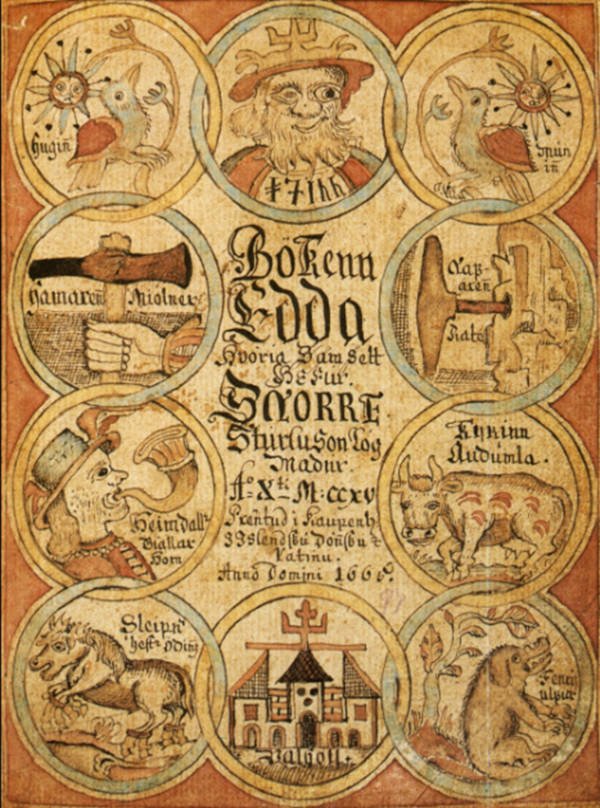
Most knowledge about Norse mythology comes from texts like the thirteenth-century Edda compiled by Icelandic scholar Snorri Sturluson. This work retells sagas of gods and heroes, but it was composed in a thoroughly Christian context, more than two hundred years after Iceland’s conversion to Christianity. The cultural and religious distance raises serious questions about accuracy.
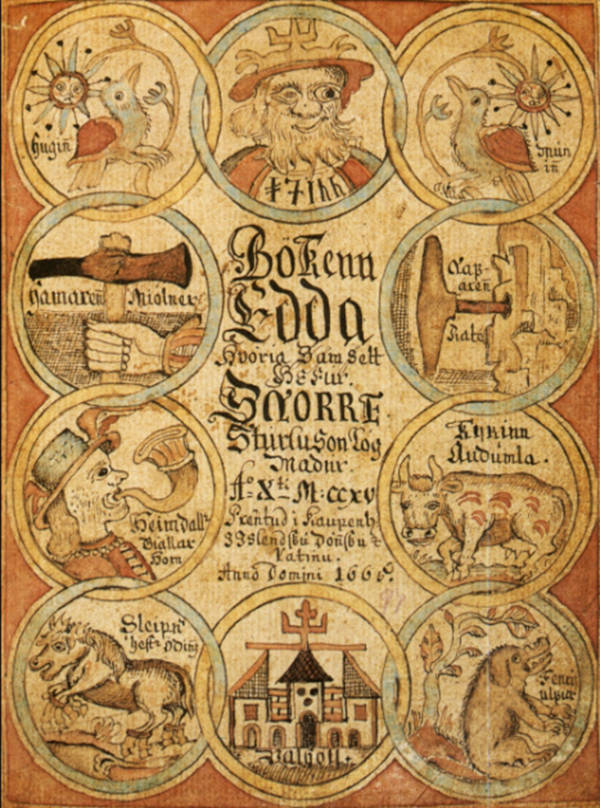
Title page from the Prose Edda, showing Odin, Heimdallr, Sleipnir and other figures from Norse mythology, from a 1665 edition. (Public Domain)
Ideas about Scandinavian paganism have been continuously reinterpreted throughout history. Each era imposed its own perspectives, from Jacob Grimm’s scholarly research to Reich Chancellor Otto von Bismarck, who referenced the Edda in speeches to the Reichstag. Each generation reshaped Viking imagery to serve contemporary purposes.
The positive modern image of Vikings contrasts sharply with how other medieval phenomena are remembered. While the Crusades evoke violence and religious oppression, Viking raids receive sympathetic treatment despite documented brutality. This selective memory appears in popular culture and political projects like the Council of Europe’s Viking Cultural Route, which presents Viking heritage as a unifying European element.
Political Exploitation and Wagner’s Lasting Influence
The research reveals how Norse paganism interpretations have served political agendas. Scheel identified the clearest negative example as appropriation by the Volk movement and National Socialists, who distorted medieval sources to support their racial ideology. Although connections to right-wing extremism persist, the reception has become more varied, claim Scheel.
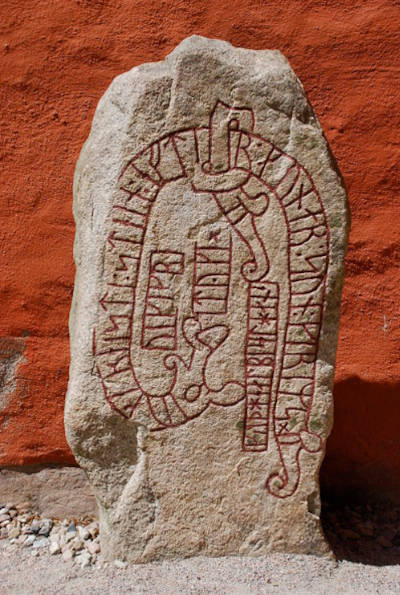
Viking runestone with runic inscriptions, one of the few authentic textual sources from the Viking Age. (I, Pieter Kuiper/CC BY-SA 3.0)
Simon Hauke, Scheel’s colleague, highlighted how artistic interpretations shaped popular understanding. Richard Wagner’s opera “The Ring of the Nibelung” established lasting stereotypes. Wagner created the image of the Valkyrie as a decidedly feminine warrior, an interpretation pervading modern culture from metal album covers to trading cards. Yet this portrayal captures only one dimension of a complex figure.
Valkyries assumed multiple roles in original texts: selecting fallen warriors, serving as lovers to heroes, and working as servers in the afterlife. While sources show Valkyries intervening in battles, their precise role remains uncertain. Wagner’s reduction of this multifaceted character has become so pervasive that it obscures the diversity of the original concept.
Examining Cultural Memory and Modern Identity
The research project, titled “Paganisations: Memorialised paganism as an element of Scandinavian and European identities,” examines how successive generations have imagined the pagan North. Scheel emphasized that studying these interpretations reveals more about later cultures than about actual Viking beliefs. The research allows scholars to examine the construction of knowledge itself.
A recent international conference explored these themes through presentations covering gender and paganism, spatial dimensions of reception, and identity construction through historiography. The gathering featured scholars from multiple disciplines, reflecting the interdisciplinary approach needed to untangle cultural memory from historical fact.
The research challenges fundamental assumptions. What appears as settled fact about Viking culture often represents layers of interpretation, political manipulation, and artistic license built upon extremely limited contemporary sources. Scheel and his colleagues argue for greater transparency about the uncertain nature of these reconstructions.
Top image: AI Representation of the popular view of a group of Vikings as fearless, violent marauders.
Source: AMERO MEDIA/Adobe Stock
By Gary Manners
References
University of Münster. 2025. Scholars of Scandinavian studies at the Cluster of Excellence are investigating cultural memories of pre-Christian Nordic paganism from the Middle Ages to the present day. Available at: https://www.uni-muenster.de/Religion-und-Politik/en/aktuelles/2025/PM_Scheel_Wikinger.shtml
University of Münster. 2025. Ideas about Vikings and pagan Norse mythology today can often not be verified scientifically. Available at: https://www.sciencedaily.com/releases/2025/11/251122044340.htm